معرفی
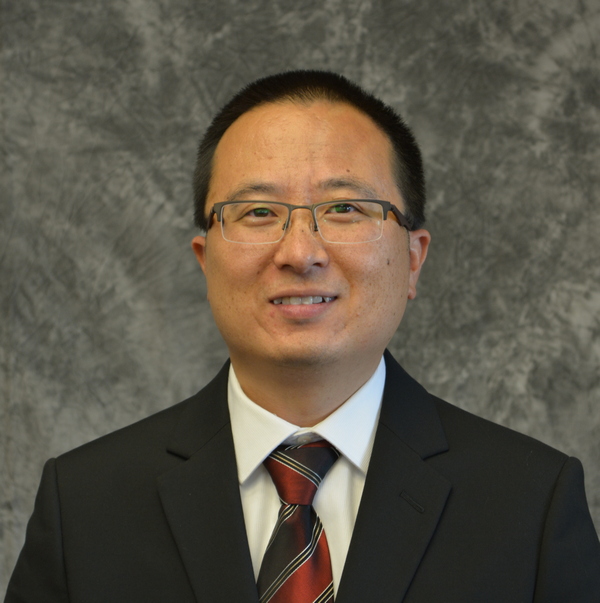
Dr. Manuel Behrendt is a Research Fellow at the Ludwig-Maximilians-Universität München, where he serves as a staff scientist at the University Observatory in the CAST-group led by Prof. Andreas Burkert. He also holds a position with the Physics of Galactic Nuclei (PGN) group at the Max-Planck-Institute for Extraterrestrial Physics in Garching, Bavaria.
His primary research focuses on the structure-formation and evolution of galactic discs in the early universe, utilizing high-resolution hydrodynamic simulations within the framework of gravitational disc instability. Dr. Behrendt's work addresses fundamental questions about:
- The formation and evolution mechanisms of giant clumps and small-scale structures in high-redshift galaxies
- The hierarchical organization of clumps, including whether observed kpc-scale clumps are composed of sub-clump clusters
- The role of stellar feedback in shaping galactic structure formation and kinematics
- The energetic sources driving high random motions observed in young galaxies
A significant contribution to the field is his development of MERA.jl, a high-performance Julia package designed for analyzing large-scale astrophysical simulation data. This tool provides:
- Efficient numerical performance through Julia's JIT compilation
- Unified API for handling multi-resolution AMR grids and particle datasets
- Interactive development capabilities that scale from notebooks to production scripts
- Memory-conscious design for processing large datasets
- Multi-threaded I/O operations for improved performance
Dr. Behrendt's publication record demonstrates a consistent research trajectory focused on galaxy formation processes, particularly examining clump structures in high-redshift galaxies. His work bridges theoretical astrophysics with practical computational methods, making important contributions both to our understanding of galaxy evolution and to the development of advanced analysis tools for the broader astrophysics community.
As an educator, Dr. Behrendt actively supervises students, teaches tutorials and astrophysical laboratory courses, and serves as a substitute lecturer for Prof. Burkert's courses. His dual commitment to research excellence and educational mentorship highlights his comprehensive contribution to the academic community.