معرفی
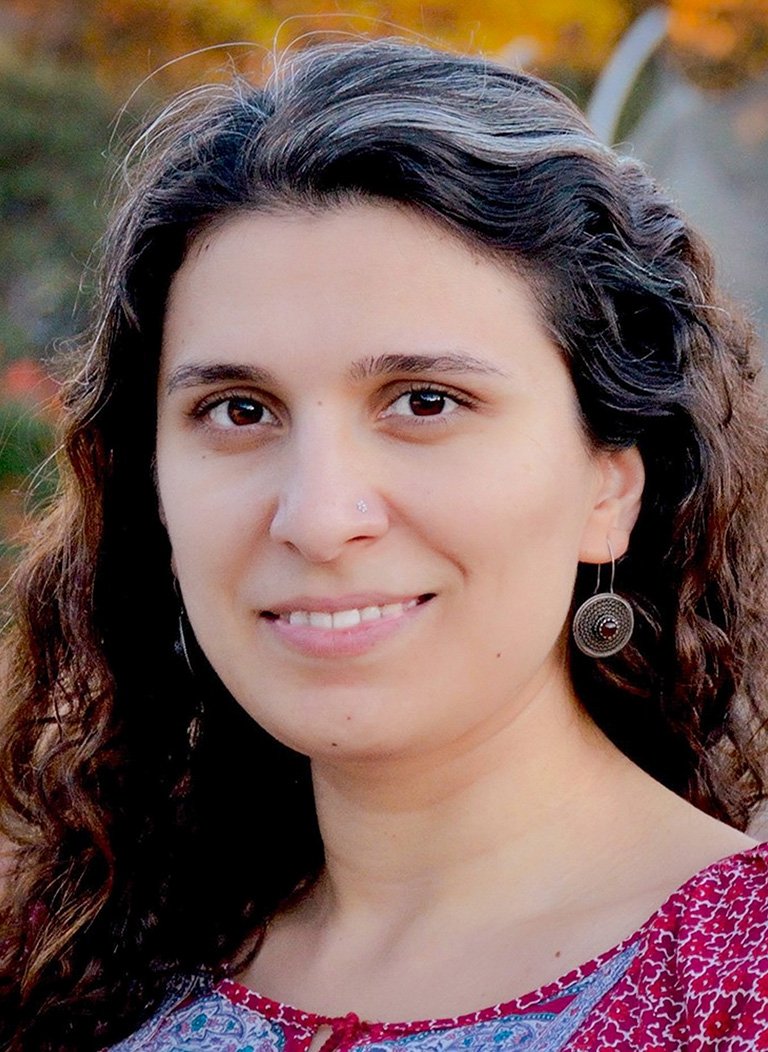
Maia Fraser is an Associate Professor in the Department of Mathematics & Statistics at the University of Ottawa, with a cross-appointment in the School of Electrical Engineering and Computer Science. She is also a member of the Brain and Mind Research Institute, reflecting her interdisciplinary research bridging mathematics, machine learning, and neuroscience.
Her research focuses on the theoretical foundations of machine learning, especially interactions with neuroscience, and she actively explores how biological learning can inspire AI algorithms. She also contributes to contact and symplectic geometry and computational geometry. Her work increasingly addresses the societal implications of AI, including its role in mathematical discovery and AI safety.
Her recent publications reveal a strong trend toward integrating reinforcement learning with temporal and spatial hierarchies, drawing from both neuroscience and geometry. She investigates regret bounds in learning, temporal abstraction, and large-scale geometric invariants, demonstrating a unique blend of mathematical rigor and AI innovation. Her work often involves interdisciplinary collaboration, particularly with neuroscientists and mathematicians.
- Guest editor, Bulletin of the AMS special issue on 'Will machines change mathematics?'
- Co-applicant on Canada-UK AI Initiative grant on modeling the self
- Co-organizer, 2022 Fields Medal Symposium in honor of Akshay Venkatesh
- Co-moderator, Panel Discussion at Forward from the Fields Medal (FFFM) 2024
Fraser leads the NSERC-CREATE-funded INTER-MATH-AI training program and is involved in the Major Thematic Program on the Mathematics of Neuroscience at the Fields Institute (2025). She has advised students and researchers across disciplines and is currently writing a book on conceptual tools for understanding AI from a societal systems perspective. Her teaching includes courses in mathematical machine learning, differential geometry, topology, and linear algebra.
She maintains active research collaborations and participates in key seminars and initiatives in machine learning, symplectic geometry, and AI ethics.
حوزههای پژوهشی