معرفی
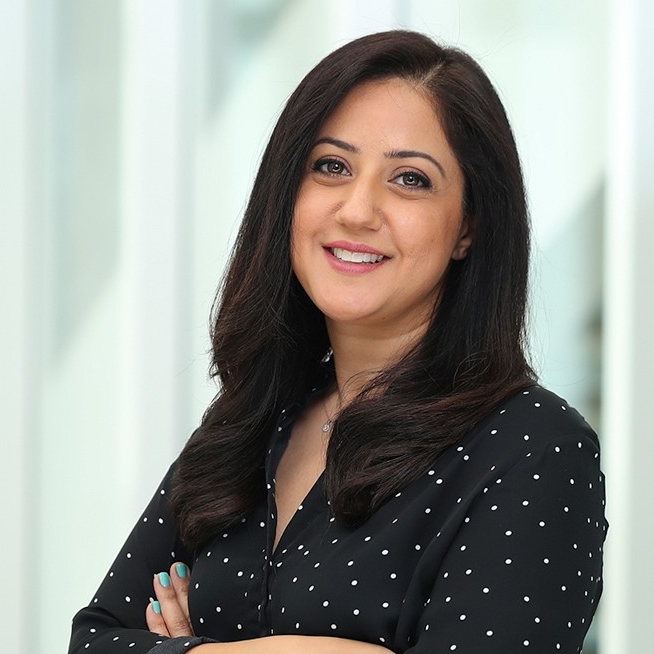
Mai Oudah is an Assistant Lecturer in the Computer Science program at New York University Abu Dhabi (NYUAD), part of the Division of Science. She holds a PhD in Interdisciplinary Engineering (Computing and Information Science – Bioinformatics) from Masdar Institute in collaboration with MIT, an MSc in Informatics (Knowledge and Data Management) from The British University in Dubai (in association with the University of Edinburgh), and a BSc in Software Engineering from Al Ain University.
Her research lies at the intersection of artificial intelligence, bioinformatics, and natural language processing. She leads the Computational Biology and Bioinformatics Lab at NYUAD, where her team develops machine learning models for disease screening using gut microbiome data, including applications for Alzheimer’s, depression, autism, multiple sclerosis, and various cancers. She also works on biomedical text mining and Arabic natural language processing, particularly in named entity recognition and machine translation.
The recent publications reflect a strong trend in applying machine learning to microbiome-based diagnostics and health informatics, with additional contributions to Arabic NLP and sociological text analysis. Her work spans interdisciplinary domains, combining computational methods with biological and medical insights.
Scientific Awards:
- No scientific awards explicitly mentioned in the provided texts.
Advising and Grants: Mai Oudah actively supervises undergraduate research students in her lab, guiding projects on disease detection, microbiome analysis, and AI applications in healthcare. She has advised numerous students who have contributed to peer-reviewed publications. While no specific grants are listed, her collaborative research with institutions like MIT and NYUAD suggests active involvement in funded research initiatives.
Labs and Teams: She leads the Computational Biology and Bioinformatics Lab at NYUAD, which focuses on three core areas: (A) Comparative Genomics/Metagenomics and Metatranscriptomics, (B) Biomedical Text Mining, and (C) Healthcare Research. The lab integrates AI, ML, and data analysis to address challenges in computational biology and public health.