معرفی
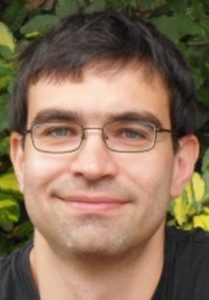
Maarten H. P. Ambaum is a Professor at the Department of Meteorology, School of Mathematical, Physical and Computational Sciences, University of Reading, UK. His research focuses on theoretical and physical aspects of atmospheric thermodynamics, particularly in deriving physically consistent equations for phase transitions and vapour pressure under atmospheric conditions.
- Institution: University of Reading
- School: School of Mathematical, Physical and Computational Sciences
- Department: Department of Meteorology
- Email: m.h.p.ambaum@reading.ac.uk
His primary research interests lie in atmospheric thermodynamics, with a focus on saturation vapour pressure over water and ice, phase equilibrium, and the application of Gibbs functions in atmospheric modeling. His work emphasizes first-principles derivations without empirical fitting parameters, ensuring physical consistency in climate and weather models. He has contributed significantly to understanding the role of latent heat variation and ideal gas assumptions in thermodynamic calculations.
The publication analyzed here (2020) demonstrates an accurate, simple equation for saturated vapour pressure that performs comparably or better than widely used empirical fits, especially above 60°C. The article also extends the formalism to ice and supercooled water, providing an explicit expression for the saturation ratio relevant to the Bergeron–Findeisen process. These contributions reflect a strong trend in his work toward simplifying complex atmospheric physics while maintaining high accuracy and theoretical rigor.
Awards and honors are not mentioned in the provided text.
There is no mention of student supervision, grants, or funding sources in the provided material. However, given his publication record and authorship of a major textbook (Thermal Physics of the Atmosphere, 2010), it is likely he has advised students and received research support, though specific details are absent.
No specific laboratory or research team is mentioned in the text. Nevertheless, his affiliation with the Department of Meteorology at the University of Reading—a leading institution in atmospheric science—suggests integration within broader research groups focused on climate dynamics, cloud physics, or theoretical meteorology.