معرفی
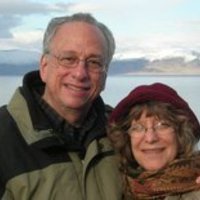
Dr. Lyndelle Webster is a postdoctoral researcher at the Austrian Academy of Sciences (OeAW), affiliated with the research groups "Prehistoric Phenomena" and "Archaeology of the Levant". Holding degrees in Physics (BSc, Australian National University), Engineering (BEng, University of Melbourne), and Archaeology (MA, MRes, PhD, Macquarie University; PhD, University of Vienna), she specializes in archaeometry with particular expertise in radiocarbon dating and soil micromorphology.
- BSc in Physics (Australian National University, 2005)
- BEng (University of Melbourne, 2007)
- MA and MRes in Archaeology (Macquarie University)
- PhD in Archaeology (University of Vienna and Macquarie University, 2021)
Her groundbreaking research includes developing radiocarbon-based site chronologies using Bayesian modeling, with a focus on resolving long-standing chronological debates in the southern Levant. She pioneered the first comprehensive 14C analysis of Late Bronze Age chronology in this region and has conducted innovative work on radiocarbon dating of challenging materials like plaster and ceramics. Her Post-DocTrack fellowship supported a pilot study on direct radiocarbon dating of Egyptian-style pottery.
Current research centers on integrating microscale techniques (soil micromorphology, radiocarbon dating) to investigate archaeological deposits, particularly in settlement archaeology. The FWF-funded Esprit project (2023-) applies this approach to Early Neolithic settlements along the Vardar-Morava River corridor in Serbia and North Macedonia. Her work contributes to understanding ancient water systems and the archaeology of the Levant during the Bronze and Iron Ages.
Scientific contributions include:
- Post-DocTrack fellowship recipient
- Collaborative work across Eastern Mediterranean and Balkan regions
- Development of radiocarbon dating methodologies for difficult materials
- Integration of microscale techniques in settlement archaeology
Lyndelle has contributed to numerous excavation projects, working with international teams to resolve chronological questions through archaeometric analysis. Her publications span prestigious journals including PLoS ONE, Radiocarbon, and Antiquity, reflecting her interdisciplinary approach combining archaeology with natural sciences.