معرفی
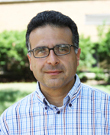
Luis Manuel Frutos Gaite is a University Professor in the Department of Analytical Chemistry, Physical Chemistry and Chemical Engineering at the University of Alcalá. He coordinates the Reactividad y Estructura Molecular (Reactivity and Molecular Structure) research group and teaches courses in computational chemistry, physical chemistry, and biophysics across multiple degree programs including Pharmacy, Chemistry, and the Chemistry for Sustainability and Energy master's program.
His research interests span several interconnected areas in theoretical and computational chemistry:
- Computational chemistry software development
- Computational models for photoinduced processes
- Study of photoreactivity of molecular devices (switches and motors)
- Study of reactivity and electronic properties of organometallic complexes
- Theoretical and computational studies of mecanochemistry and photomechanical chemistry
- Quantum chemical studies of molecular processes and systems
Professor Frutos Gaite's recent publications (2019-2025) demonstrate a strong focus on the intersection of mechanical forces and photochemical processes, with applications to molecular switches, solar energy storage systems, and fundamental understanding of photochemical mechanisms. His work often employs advanced computational methods including multiconfigurational quantum mechanical calculations and molecular dynamics simulations.
Notable scientific contributions include:
- Development of computational models for predicting reactivity under mechanical forces
- Studies on mechanical modulation of energy gaps in molecular systems
- Research on molecular solar-thermal energy storage systems
- Contributions to the OpenMolcas quantum chemistry software package
- Elucidation of photoisomerization mechanisms relevant to vision
Professor Frutos Gaite has secured multiple research grants from the University of Alcalá, the Spanish Ministry of Science and Innovation, and other funding bodies. His research group actively collaborates with national and international partners, contributing to the advancement of computational photochemistry and mecanochemistry.
His laboratory, the Reactividad y Estructura Molecular research group, provides a dynamic environment for students and researchers interested in computational approaches to chemical problems, with particular emphasis on photochemical and mechanochemical processes.