معرفی
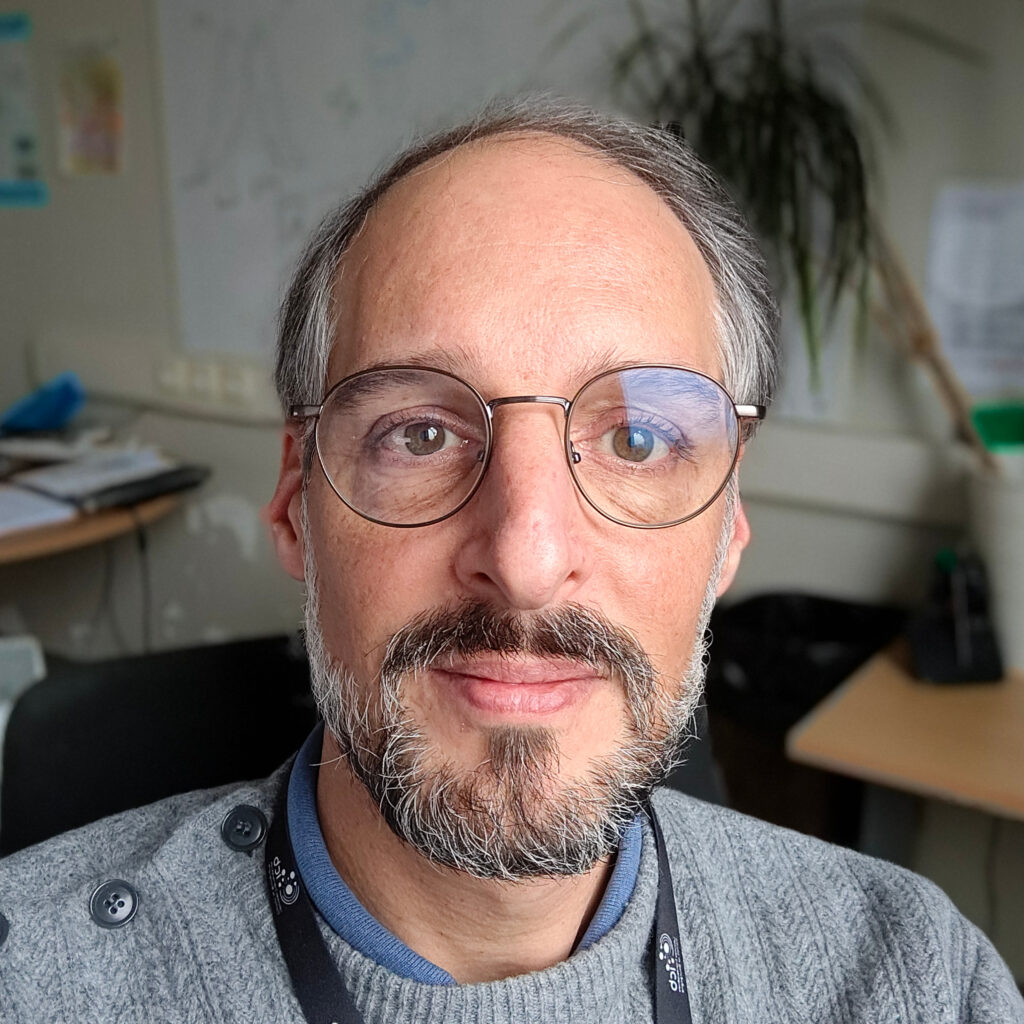
Lucien Saviot is a CNRS Research Director at the Carnot Interdisciplinary Laboratory in Burgundy, University of Burgundy, where he has been working since 2010. His research focuses on vibrational dynamics in nanoparticles, particularly confined acoustic modes studied through low-frequency Raman spectroscopy and modeling.
Dr. Saviot was a student at the École Normale Supérieure de Lyon in 1989, obtained his doctorate in material sciences from the University of Lyon I in 1995, joined CNRS as a research fellow in 1997, and moved to the University of Burgundy in 2001.
His primary research interests lie at the intersection of nanotechnology, materials science, and optics. Dr. Saviot specializes in studying the vibrational properties of nanomaterials, particularly how particle shape, size, and composition affect acoustic modes. His work combines experimental approaches using Raman spectroscopy with theoretical modeling to understand the fundamental physics of vibrations in nano-objects. This research has important implications for applications in sensing, catalysis, and nanomechanical systems. A notable aspect of his work is the development of computational tools for modeling vibrations in anisotropic nano-objects with various shapes.
Analysis of Dr. Saviot's recent publications reveals a consistent focus on vibrational dynamics across various nanomaterials. His work spans metallic nanoparticles (particularly gold and silver), semiconductor nanocrystals, and complex nanostructures like core-shell particles and mesoporous materials. The research employs advanced spectroscopic techniques, especially Raman scattering, to probe acoustic phonons and their interactions with plasmonic effects. A significant trend is the increasing sophistication in connecting particle morphology to vibrational properties, with recent work examining edge effects, ligand influences, and protein corona formation on nanoparticles.
Dr. Saviot leads research activities within the Nanosciences department at the Carnot Interdisciplinary Laboratory, where he collaborates with physicists, materials scientists, and chemists to advance the understanding of nanoscale mechanical properties. His laboratory maintains active collaborations with research groups across Europe and internationally, contributing to the broader nanoscience community through both experimental findings and computational tools.