معرفی
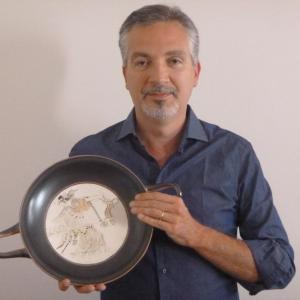
Luca Cappuccini is an Associate Professor of Etruscology and Pre-Roman Italian Civilization at the University of Florence, Department of History, Archaeology, Geography, Arts and Entertainment (SAGAS). He currently serves as President of the Degree Course in Archaeology (LM-2) and heads the Laboratory of Classical Archaeology and Etruscology (ArCE). His academic career began with a degree in Etruscology in 2003 from the University of Florence, followed by a PhD in 2007. He became a full-time researcher in Etruscology at the University of Florence in 2012 and was promoted to Associate Professor in 2020.
Cappuccini's research focuses on Etruscan art and craftsmanship during the Orientalizing and Archaic periods, settlement patterns with particular reference to northern Etruria, the genesis and development of Etruscan hilltop settlements, and funerary architecture from the Orientalizing period. His fieldwork includes directing excavations at Monte Giovi (2011-2015), San Germano necropolis (2012-2018), and Gonfienti archaeological area (since 2020), as well as coordinating research on the Puntone necropolis near Saturnia, Poggio Pelliccia tumulus in Vetulonia, and the Sassi Grossi funerary complex in Roselle.
His extensive publication record demonstrates consistent scholarly output across multiple specialized areas of Etruscan studies, with recent work showing increasing interdisciplinary approaches combining traditional archaeology with scientific analysis methods. Cappuccini has also been actively involved in museum curation, having contributed to the archaeological section of the Montalcino Civic Museum and curated exhibitions on Monte Giovi at Pontassieve.
As a Corresponding Member of the Institute of Etruscan and Italic Studies and member of the Teaching Board of the Doctoral School in Ancient Sciences and Archaeology at the University of Pisa, Cappuccini maintains significant institutional connections across Italian academic networks. His collaborative work with the University of Zurich on archaeological missions at Monte Iato (2009-2017) and Spina etrusca further demonstrates his international engagement.