معرفی
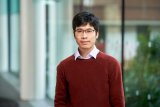
Luc Bridet is a Lecturer in the School of Economics & Finance at the University of St Andrews, UK. He is actively involved in research and teaching, with a strong focus on microeconomic theory and its applications in information, behaviour, and institutional design. He is currently accepting postgraduate research students and supervises PhD projects in areas such as organisational incentives, charity evaluation, and higher education policy.
Research Interests: Luc's research centers on the economics of information, particularly the trade-off between experimentation and optimal decision-making under uncertainty. He explores behavioural aspects such as image concerns, self-delusion, and self-signalling, and applies indirect inference methods to test theoretical models using real-world data, especially in higher education contexts. His broader expertise includes microeconomic theory, industrial organisation, public economics, contract theory, and experimentation.
Publication Trends: His recent publications reflect a consistent focus on strategic behaviour under asymmetric information. Topics include endogenous optimism in financial markets, taxation of persuasive efforts in conflict settings, and the labour market consequences of educational timing. These works combine theoretical modelling with practical implications, often using dynamic frameworks and real-world calibration.
Scientific Awards:
- No awards explicitly mentioned in the provided text.
Advising and Grants: Luc Bridet is accepting postgraduate research students and offers supervision on topics including team incentives, intrinsic motivation, charity sector evaluation, student assessment design, and grade inflation. While specific grants are not listed, his research output suggests active engagement in funded or institutionally supported projects, particularly through the School of Economics & Finance at St Andrews.
Labs and Research Teams: Luc is affiliated with the research community in the School of Economics & Finance at the University of St Andrews. His collaborative work, such as with Paul Schwardmann and Margaret A. Leighton, indicates participation in research networks focused on applied microeconomics and behavioural economics. He contributes to the school's research output through discussion papers and peer-reviewed articles, aligning with broader institutional research themes including sustainable development goals related to quality education and reduced inequalities.