معرفی
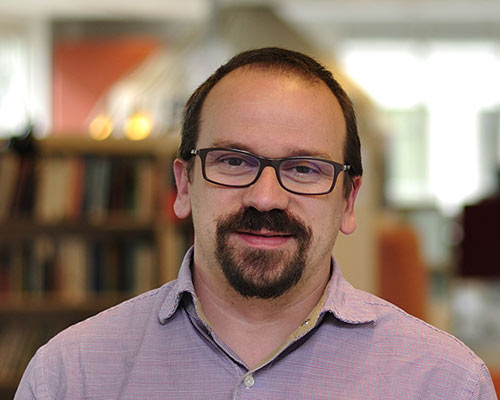
Lorenzo Moroni is a Full Professor in Biofabrication for Regenerative Medicine at the MERLN Institute for Technology-Inspired Regenerative Medicine of Maastricht University. He leads research in developing biofabrication technologies to generate instructive scaffolds for controlling stem cell fate in tissue engineering applications. His work bridges the gap between advanced manufacturing techniques and regenerative medicine solutions.
- Ph.D. (cum laude) in Tissue Regeneration from Universiteit Twente (2003-2006)
- M.Sc. (cum laude) in Nanoscale Science and Engineering from Chalmers tekniska högskola (1999-2002)
- M.Sc. in Biomedical Engineering from Politecnico di Milano (1995-2001)
Professor Moroni's research focuses on the intersection of biomaterials science, stem cell biology, and advanced manufacturing techniques. His laboratory specializes in developing 3D scaffolds and biofabrication technologies for tissue engineering applications, with particular emphasis on controlling stem cell fate through engineered microenvironments. The group investigates various biomaterial systems including hydrogels, nanofibers, and composite scaffolds for applications in bone, cartilage, nerve, vascular, and kidney tissue regeneration. Recent work has expanded into computational modeling of scaffold design and multi-material bioprinting approaches that enable more complex tissue architectures.
His publication record reveals a strategic evolution toward increasingly sophisticated biofabrication methodologies, with significant emphasis on melt electrowriting, multi-material bioprinting, and the development of organ-specific models. The research spans multiple tissue systems but demonstrates particular depth in vascular engineering, osteochondral regeneration, and kidney organoid development. A distinctive pattern across his recent work is the integration of computational modeling with experimental validation to optimize scaffold architecture and predict cellular responses, representing a systems approach to tissue engineering challenges.
Professor Moroni has served as principal investigator for numerous collaborative research projects in regenerative medicine and maintains an active laboratory environment that fosters interdisciplinary collaboration. His research group includes specialists in biomaterials science, stem cell biology, computational modeling, and advanced manufacturing, creating a comprehensive ecosystem for tissue engineering innovation. The laboratory maintains strong partnerships with clinical researchers and industry collaborators to facilitate translational development of biofabricated constructs.
The Moroni Lab at Maastricht University's MERLN Institute operates state-of-the-art facilities for biomaterials development, biofabrication, and tissue characterization. The team employs a multidisciplinary approach combining expertise in materials science, stem cell biology, biomechanics, and advanced manufacturing to address complex challenges in regenerative medicine. Current projects focus on developing next-generation biomaterial platforms that can precisely guide tissue formation and integration in vivo, with particular attention to vascularization strategies and the creation of functional organ-specific microenvironments.