معرفی
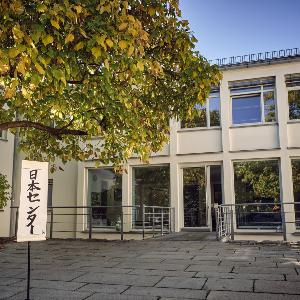
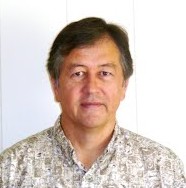
Lonny Carlile serves as Associate Professor in the Asian Studies Program and Center for Japanese Studies at the University of Hawaii's School of Pacific and Asian Studies, holding this joint appointment continuously since July 2001 after previously serving as Assistant Professor from January 1994. His academic trajectory includes faculty positions at the University of British Columbia (1988-1993), University of Illinois (1987-1988), and research appointments at Kyushu University and the University of Tokyo.
Educational Background:
- Ph.D. in Political Science, University of California at Berkeley, 1989 (Dissertation: Zaikai and the Politics of Production in Japan, 1940-1962)
- M.A. (Hogaku Shushi) in Political Science, Kyushu University, Fukuoka, Japan, 1979
- B.A. with Distinction in Political Science and Asian Studies, University of Hawaii, 1974
Carlile's research employs interdisciplinary area studies methodologies to examine Japan's political economy, with concentrated expertise in labor politics, state-business relations, and tourism policy. His scholarly perspective investigates how social processes and state policies interact to shape Japanese societal institutions across historical and regional contexts, while also exploring broader Asia-Pacific cultural interconnections.
Analysis of his 12 publications (1995-2011) reveals sustained scholarly engagement with Japanese institutional development, particularly examining labor movement evolution through works like "Divisions of Labor" (2005) and "Rediscovering Enterprise Unions" (2008). His research spans political science, labor history, and tourism studies, with notable contributions to understanding regulatory reform (1998), area studies institutionalization (2010), and cultural identity construction (2009), demonstrating consistent methodological bridging between political economy and cultural analysis.
Scientific Awards:
No scientific awards were documented in the provided materials.
Advising and Grants:
The source text contains no specific references to graduate students advised, research grants administered, or sponsored projects.
Labs and Teams:
No research laboratories, collaborative teams, or institutional research centers beyond his program appointments were mentioned.