معرفی
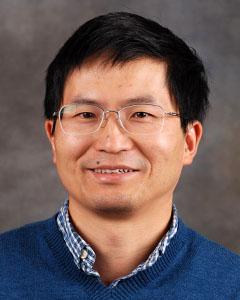
Liming Zhang is a Professor in the Department of Chemistry and Biochemistry at the University of California, Santa Barbara (UCSB). His research focuses on developing novel synthetic methods using catalytic platforms, particularly gold catalysis, to streamline organic synthesis and access complex molecular structures. He joined UCSB in 2009 after serving as an assistant professor at the University of Nevada, Reno. Zhang holds a B.S. from Nanchang University (1993), two M.S. degrees from Nankai University and the University of Alabama (1996, 1998), and a Ph.D. from the University of Michigan (2003), followed by postdoctoral work at the University of Chicago.
His research interests include gold(I)/gold(III) catalysis, alkynes as equivalents of diazo compounds, and tandem catalytic transformations for synthesizing bioactive molecules. Key areas of application include natural product total synthesis and medicinal chemistry. Notable awards include the NSF CAREER Award (2008), Amgen Young Investigator Award (2008), and Alfred P. Sloan Fellowship (2009).
- Education:
- B.S., Nanchang University (1993)
- M.S., Nankai University (1996)
- M.S., University of Alabama (1998)
- Ph.D., University of Michigan (2003)
- Postdoctoral Fellow, University of Chicago (2003–2005)
Publications highlight advancements in gold-catalyzed oxidation of alkynes, regioselective dimerizations, and mechanistic studies. His work frequently integrates computational chemistry to validate experimental findings. Current projects explore gold/platinum catalytic tandem reactions and the synthesis of complex natural products like mitosene analogs.
Awards & Funding:
- NSF CAREER Award (CHE-0969157)
- NIGMS R01 Grant (GM084254)
- Highlighted contributions in Nature Chemistry and Synfacts
Labs & Teams: The Zhang Research Group at UCSB focuses on catalytic innovation, with a lab website detailing ongoing projects and collaborations (http://www.chem.ucsb.edu/~zhang/index.html).