معرفی
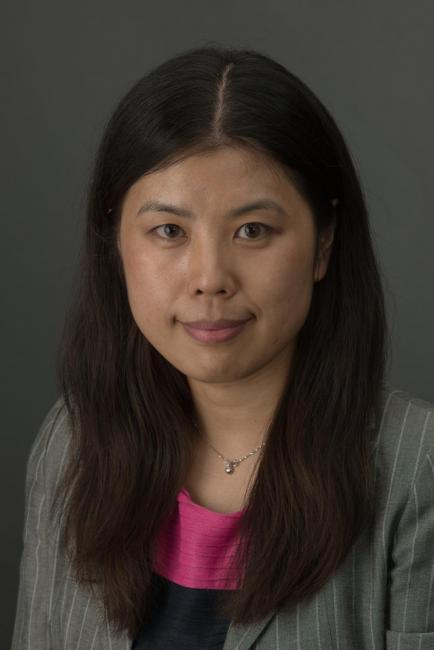
Lijing Yang is an active Associate Professor in the Counseling and Higher Education department at Ohio University's Patton College of Education, with offices in Patton Hall 432N and 432T. Contactable via yangl@ohio.edu or 740.597.1930, she teaches graduate courses in higher education finance, statistical analysis of national datasets, policy, and international comparative studies. Her role involves direct instruction and research leadership within the university's academic structure.
Education Background:
- Ph.D. in Higher Education from the University of Michigan
- Postdoctoral Training from the Institute of Higher Education at the University of Georgia
Her research centers on the economic and policy mechanisms shaping higher education access globally, particularly examining financial aid systems, state appropriation impacts, and cross-national equity patterns. She emphasizes quantitative analysis of large-scale datasets to uncover systemic barriers for rural students and international populations, linking funding models to real-world outcomes in vocational education and community colleges. Her work bridges theoretical frameworks with actionable policy insights.
Publications since 2013 reveal consistent focus on finance-policy interactions, with recent studies analyzing online enrollment responses to budget cuts, athlete academic success in NAIA programs, and vocational education investment in developing economies. She frequently employs longitudinal and fixed-effects methods across OECD and Asia-Pacific contexts, maintaining strong collaboration with scholars like Edward P. St. John.
Scientific Awards:
- No awards, fellowships, or medals mentioned in source text
Dr. Yang advises graduate students in higher education programs based on her teaching responsibilities, though specific advisees aren't listed. Her NSF-level dataset analyses and cross-country studies imply grant-funded research, but no projects or funding sources are documented in the provided material.
Her institutional affiliation is solely with Ohio University's Patton College. No dedicated research labs, centers, or team structures are referenced; work appears integrated within departmental activities and collaborative projects with international scholars.