معرفی
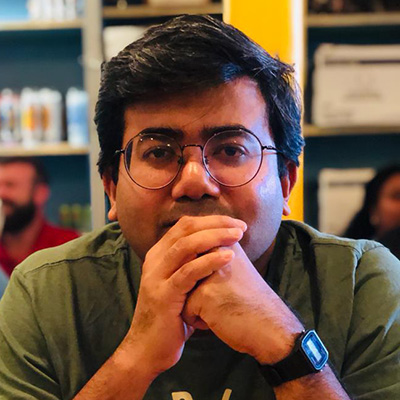
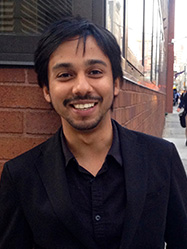
Leo Coleman is Associate Professor of Anthropology at Hunter College and the Graduate Center, City University of New York. His work bridges political and legal anthropology with urban studies, science and technology studies, and postcolonial theory, with regional expertise in India, Scotland, and the British Empire.
Dr. Coleman's educational background includes a PhD from Princeton University (2008) and studies at the University of St Andrews. His research explores the intersections of technology, politics, and personhood in urban contexts, with particular attention to how technological infrastructures shape political imaginations and social relations.
His research interests focus on technics and ethics, urban sociality and solitude, and the legal forms and norms of group-life. He examines how technological installations give form to political ideologies, particularly through his work on electrification in New Delhi as explored in his book A Moral Technology: Electrification as Political Ritual in New Delhi (Cornell University Press, 2017). His current projects include a comparative historical anthropology of constitutional and legal form in the British Empire and a postcolonial history of the concept of energy and its transformations in social thought.
Dr. Coleman has published extensively in leading journals including American Ethnologist, Comparative Studies in Society and History, and Anthropological Quarterly. His work demonstrates consistent engagement with theoretical questions about infrastructure, political imagination, and the entanglements of anthropology with technological modernity. Recent publications have focused on electrical metaphors for political relations, constitutional limits to executive power, and legal and aesthetic formalism as interpretive methods.
As an educator and scholar, Dr. Coleman has contributed significantly to the field through his editorial work, including the special issue of Verge: Studies in Global Asias on "Infrastructures and Global Political Aesthetics" (2020) and the edited volume Food: Ethnographic Encounters (Berg Press, 2011).
His research has been supported by extensive fieldwork in Delhi, India (2005-2006), ongoing fieldwork in Scotland, and archival research across multiple continents. Dr. Coleman continues to be an active contributor to anthropological discourse with his innovative approaches to understanding the relationships between technology, politics, and urban experience.