معرفی
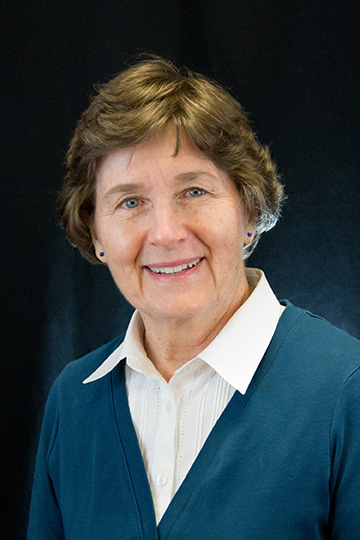
Leah B. Shaw is an Associate Professor in the Department of Mathematics at the College of William and Mary, with an affiliate appointment in the Applied Science Department. Her research integrates applied mathematics, physics, and biology to model population dynamics in ecological and epidemiological systems.
Education:
- BS in Physics and Mathematics, Virginia Tech
- MS in Mathematics, Virginia Tech
- PhD in Physics, Cornell University
Her research focuses on the interplay between network structure, stochasticity, and population dynamics. She develops mathematical models to study epidemic spread, ecosystem resilience, and extinction risks. Key areas include adaptive networks, marine population dynamics (particularly oysters and blue crabs in the Chesapeake Bay), and stochastic extinction pathways. Her methodological toolkit spans statistical mechanics, nonlinear dynamics, and computational simulations.
The analysis of her recent publications reveals a strong focus on epidemic modeling in complex networks, with recurring themes of adaptive behavior, multistrain interactions, and control strategies. Her work often bridges theoretical frameworks with real-world applications in public health and environmental conservation. She also explores fundamental questions in nonequilibrium systems and synchronization phenomena.
Scientific Contributions:
- Developed models for epidemic control using behavioral adaptation and vaccination in networked populations.
- Studied bistability in oyster reef ecosystems, informing restoration strategies.
- Advanced theoretical understanding of stochastic extinction paths in finite populations.
- Mentored undergraduate researchers in mathematical biology projects.
- Published extensively in interdisciplinary journals such as Bulletin of Mathematical Biology, Physical Review E, and Journal of Theoretical Biology.
Dr. Shaw mentors PhD students in Applied Science with interests in mathematical biology and welcomes undergraduate researchers, particularly those seeking summer fellowships. She emphasizes collaboration and interdisciplinary training. Her group investigates topics ranging from polio control using defective interfering particles to opinion dynamics and nonequilibrium traffic models, reflecting a broad yet cohesive research vision.