معرفی
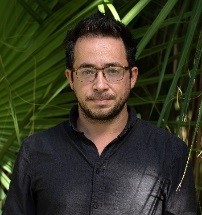
Lawrence E. Reeves is an Assistant Professor in the Entomology and Nematology Department at the University of Florida's Institute of Food and Agricultural Sciences (UF/IFAS), based at the Florida Medical Entomology Laboratory (FMEL) in Vero Beach. His research focuses on medical entomology, particularly mosquito biology, vector ecology, and the identification of arthropod vectors of disease. Dr. Reeves has made significant contributions to the understanding of mosquito taxonomy, invasive species monitoring, and vector-pathogen relationships.
His research interests span mosquito biology, medical entomology, vector ecology, arthropod-borne diseases, and invasive species monitoring. Dr. Reeves specializes in the identification and ecology of medically important mosquito species, particularly those in the genus Culex, and has published extensively on Culex coronator, an invasive species that has expanded its range across the United States. His work combines morphological identification with ecological and behavioral studies to understand vector competence and disease transmission dynamics.
Dr. Reeves' publication record demonstrates expertise in both mosquito and spider systematics, with significant contributions to understanding medically important arthropods. His research on Uranotaenia sapphirina revealed this species' unique specialization on invertebrate hosts (earthworms and leeches) rather than vertebrates, representing a significant departure from typical mosquito feeding behavior. His work on Phoneutria spiders has helped distinguish medically important species from harmless look-alikes in cargo shipments.
Dr. Reeves has received research funding from sources including the Southern IPM Center as part of USDA National Institute of Food and Agriculture Crop Protection and Pest Management Regional Coordination Program. His collaborative research approach is evident in his numerous co-authored publications with colleagues from various institutions.
His laboratory work focuses on mosquito identification, vector surveillance, and understanding the ecological factors that influence vector-pathogen interactions. Dr. Reeves' research has important implications for public health, particularly in monitoring invasive mosquito species that may serve as vectors for emerging arboviruses.