معرفی
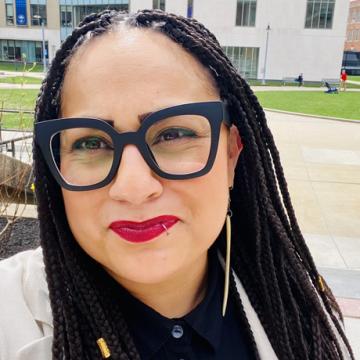
Laura Porterfield serves as an Assistant Professor of Urban Education at Rutgers University with a dual appointment in Africana Studies, focusing on equity and justice practices across K-16 educational settings through visual texts and urban spatial analysis. Her work centers on how visuality, affect, and place shape learning experiences for youth of color while addressing disproportionate disciplinary mechanisms.
Her educational background includes:
- Doctorate of Philosophy in Urban Education from Temple University (2013)
- Master of Education in Urban Education from Temple University (2010)
- Bachelor of Arts in English Literature (African and African American Literature concentration) from the University of Rochester (2006)
Porterfield's research critically examines visual markers of social identity in school cultures, developing tools like the empirically-validated "Teacher Candidate: Cultural Awareness, Relevancy, and Efficacy Scale" (TC-CARES) to assess culturally relevant pedagogy. She currently leads "The Seeing Wellness Project," a participatory visual ethnography documenting self-care rituals among transgender, women, and gender non-conforming BIPOC justice leaders globally to combat activist burnout. Her methodology emphasizes community co-creation through participatory action research and visual ethnography.
Publication analysis reveals consistent interdisciplinary engagement at the intersection of urban education, critical race theory, and visual studies, with recurring themes in spatial justice, Black girlhood studies, and equity tool development. Her work demonstrates methodological innovation through visual and spatial approaches to educational inequity.
No scientific awards or major honors were documented in the source materials.
She directs multiple research initiatives including statewide evaluations of urban teacher preparation programs with the University of Wisconsin-System’s Institute for Urban Education, community-based DEIJ assessments for schools and religious institutions, and co-creation of gender/racial equity tools with community partners. Her projects consistently involve youth participatory research and institutional capacity building.
Her primary research collective operates through The Seeing Wellness Project, functioning as an international network connecting BIPOC diversity leaders across the global north and south to document and sustain wellness practices through visual methodologies.