معرفی
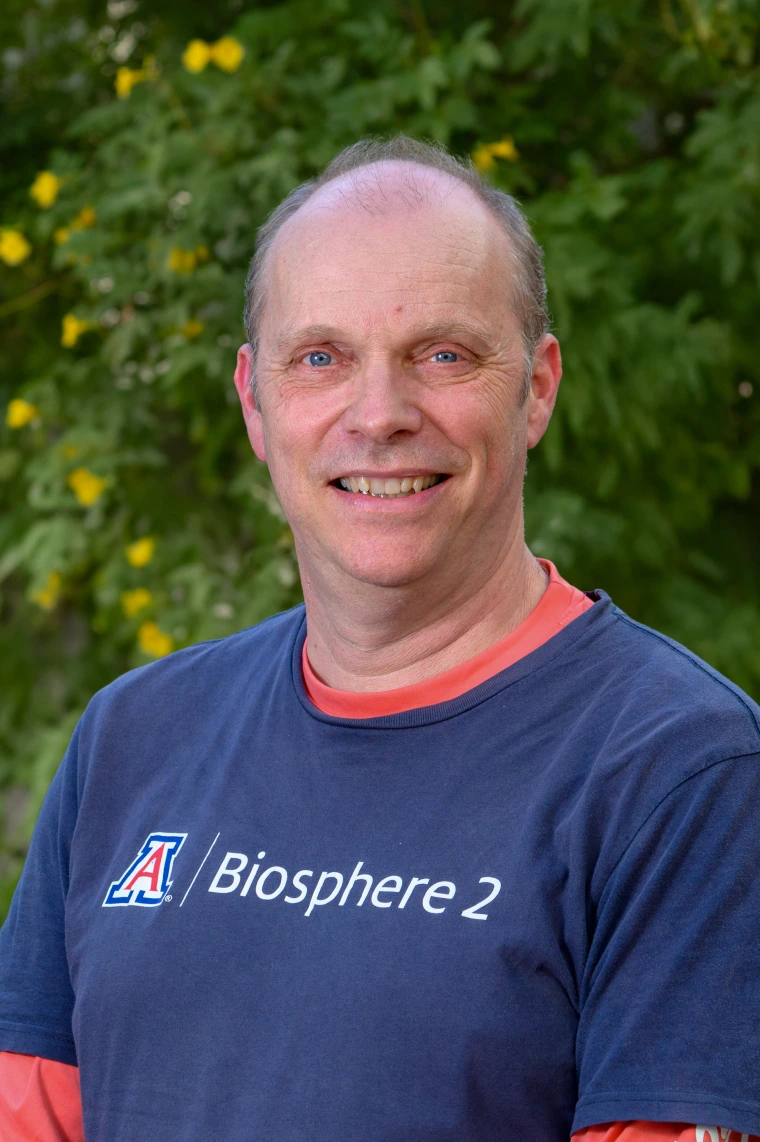
Laura Meredith is a Joint Assistant Professor in multiple departments at the University of Arizona: Hydrology and Atmospheric Sciences, Ecosystem Genomics (home department), Biosphere 2 Institute, Genetics (GIDP), and Global Change (GIDP). She serves as Director of the Biopshere 2 Tropical Rain Forest. Her research focuses on interdisciplinary environmental microbiology and atmospheric chemistry, particularly microbe-mediated trace gas fluxes and soil-atmosphere interactions. Meredith uses advanced laboratory and observational techniques to link genes to functional processes and study ecosystem responses to drought and climate change.
Educated at MIT with a PhD in Climate Physics and Chemistry (2013), she emphasizes real-time soil gas monitoring, isotopic tracing, and omics technologies. Her work spans tropical rainforests, Arctic tundra, and urban ecosystems, addressing VOC cycling, microbial metabolism, and soil health.
Research interests include microbial VOC production/uptake, drought impacts on soil microbiology, and plant-microbe interactions under environmental stress. She develops novel sensors and analytical methods like GC-PTR-TOF-MS and in-situ soil probes to study subsurface dynamics. Meredith's lab at Biosphere 2 investigates artificial rainforest ecosystems under controlled drought conditions, linking root physiology to ecosystem carbon/water fluxes.
Her articles reveal trends in understanding microbial volatilomes, Arctic soil-carbon feedbacks, and urban green infrastructure's role in VOC mitigation. Key projects include the CAREER grant on belowground biology's role in VOC exchange and studies on nitrogen cycling in agricultural soils. Meredith collaborates internationally on projects like the Alaskan Growing Season carbonyl sulfide fluxes and tropical rainforest conversion impacts in the Amazon.
Grants include NSF CAREER funding. She mentors students in interdisciplinary environmental science, emphasizing fieldwork and computational modeling. Future research targets scaling microbial VOC findings to global climate models and improving soil health assessment tools for semi-arid regions.