معرفی
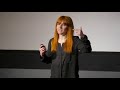
Professor Laura Caulfield is a leading academic at the University of Wolverhampton, serving as the Founding Chair and Director of the Institute for Community Research and Development since 2017. With a career spanning over two decades, she has held senior academic roles including Assistant Dean (Research & Postgraduate Affairs) at Bath Spa University (2016–2017) and Head of Psychology at Bath Spa University (2012–2016). A psychologist by training, her work bridges evidence, policy, and practice in criminal justice, focusing on interdisciplinary approaches to complex social issues.
- Education: PhD in Psychology (Loughborough University), BSc (Sociology & Psychology, Aston University), PG Cert in Higher Education (Birmingham City University)
- Leadership: Led University of Wolverhampton to HR Excellence in Research award (Vitae), Chaired West Midlands Violence Reduction Partnership’s Evidence and Advisory Board, and contributed to national and international policy discussions.
Her research explores the role of arts in criminal justice and corrections, influencing prison policy and practice through methodological innovations. She has challenged government restrictions on prison arts activities and developed frameworks for evaluating trauma-informed policing and violence reduction programs. Her work spans partnerships with the Home Office, NHS, Ministry of Justice, and third-sector organizations.
Recent publications highlight her focus on creative co-production, arts-based rehabilitation, and community-led interventions. These include a 2024 edited book on arts in criminal justice, a 2025 third edition of her research methods textbook, and 2026 chapters on youth justice co-production. Her grant-funded projects include evaluations of violence reduction units, social prescribing initiatives, and child-first approaches.
She has received accolades such as the Howard League for Penal Reform Commendation Award and recognition from the Asian Psychological Association for her work on Javanese Gamelan music. Professional roles include board membership with the Southwest Correctional Arts Network (USA) and editorial contributions to the Journal of Criminal Psychology and Journal of Applied Arts and Health.
A dedicated educator, she teaches Quantitative and Qualitative Research Methods and has supervised research on topics like domestic abuse victim support, prisoner rehabilitation, and domestic violence networks. Her leadership extends to advisory roles for the West Midlands Combined Authority and the Good Vibrations Board of Trustees.