معرفی
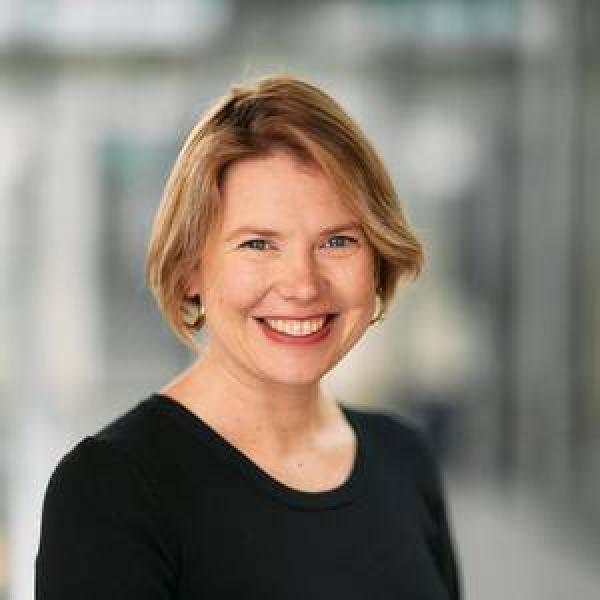
Laura Blow serves as an Associate Professor at the University of Surrey, having joined as a full-time lecturer in August 2016. Her academic profile centers on applied microeconomic research with significant contributions to consumption behavior analysis and behavioral economics.
Her educational trajectory includes:
- Undergraduate degree in Economics from Cambridge University
- Masters degree in Economics from Oxford University
- PhD in Economics from University College London
Blow's research investigates how individuals make consumption choices through both theoretical frameworks and empirical validation. She specializes in revealed preference theory, developing nonparametric tests to evaluate behavioral models like hyperbolic discounting, reference dependence, and mental accounting. Her work bridges advanced econometric methods with real-world policy applications, particularly examining how cognitive biases affect financial decision-making across diverse household contexts. Current projects analyze time-inconsistent preferences in lifecycle consumption patterns using large-scale expenditure datasets.
Publication trends reveal consistent focus on household economic behavior, with dominant themes including nonparametric testing of behavioral models, policy-driven spending interventions, and environmental valuation. Her methodology emphasizes microeconometric analysis of survey data to uncover how labeling effects, temperature shocks, and discounting mechanisms alter expenditure allocations. Recent work demonstrates increasing sophistication in modeling intertemporal choice while maintaining empirical rigor.
Recognition for her contributions includes:
- Atkinson Award (2017)
Blow maintains active research collaborations with leading economists including Martin Browning and Ian Crawford, focusing on household demand systems and behavioral interventions. While specific grant details aren't documented in available materials, her publication record indicates sustained funding for empirical microeconomic projects analyzing consumption choices under policy constraints and environmental stressors.
No dedicated laboratory or research team structure is referenced in current documentation, though her collaborative publications suggest participation in multi-institutional research networks focused on applied microeconomics.