معرفی
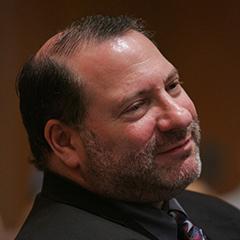
Lance Strate is Professor of Communication and Media Studies at Fordham University, where he has held administrative roles including Department Chair and Associate Chair for Graduate and Undergraduate Studies. He also served as the Harron Family Endowed Chair at Villanova University in 2015 and holds an honorary appointment at Henan University in China.
Education:
- Ph.D., New York University
Internationally recognized for pioneering work in media ecology, Strate's research centers on Marshall McLuhan, Walter Ong, and Neil Postman's theories. His scholarship spans new media, digital technologies, popular culture, and symbolic communication, with interdisciplinary explorations into autism, ethics, language, and the philosophy of time and technology. He examines how media environments shape human cognition and social structures through historical and contemporary lenses.
His recent publications reveal consistent focus on ethical dimensions of media environments, the human condition within media ecology, and narrative structures in storytelling. Key trends include analyzing technology's non-neutrality, information's relationship to media forms, and autism's communication challenges within digital contexts, demonstrating his commitment to foundational media ecological principles.
Scientific Awards:
- Media Ecology Association's Walter J. Ong Award (2013)
- Marshall McLuhan Award (2018)
- New York State Communication Association's John F. Wilson Fellow Award (1998)
- Neil Postman Mentor Award (2018)
- Eastern Communication Association's Distinguished Research Fellow Award (2019)
- Global Listening Centre’s Outstanding Research Award (2020)
- Malahat Review Poetry Contest Winner (2012)
As mentor and academic leader, Strate founded the Media Ecology Association and served over a decade as its President. His editorial work includes founding Explorations in Media Ecology and editing multiple book series. He actively advises autism groups in Northern New Jersey and serves on international academic boards, demonstrating commitment to both scholarly advancement and community engagement through his leadership roles in the Institute of General Semantics and Global Listening Centre.