معرفی
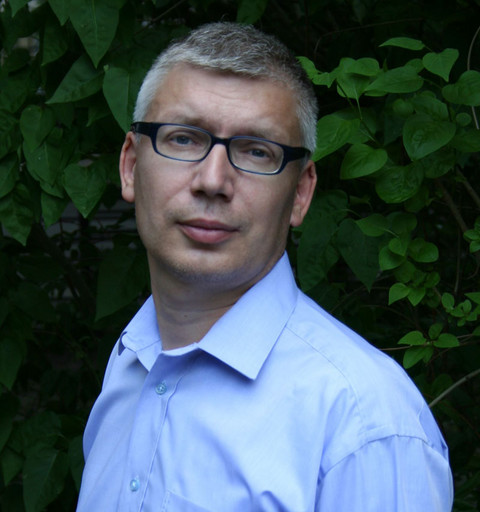
Ladislav Kesner serves as a Professor at the Art History Seminar within the Faculty of Arts at Masaryk University in Brno, Czech Republic. His academic career spans decades with significant contributions to art history, neuroscience, and museum studies. Previously, he held leadership roles including Director of Cultropa, sro and Deputy General Director of the National Gallery in Prague.
- Born March 27, 1961 in Prague
- Ph.D. from Masaryk University (2004)
- Postdoctoral Fellowship at UC Berkeley (1989-90)
- Habilitation completed at Masaryk University (2007)
- Appointed Professor (2020)
Professor Kesner's research focuses on the intersection of art history and neuroscience, particularly examining visual perception, emotional responses to art, and the interpretation of Chinese art. His work bridges theoretical art history with empirical neuroscience, exploring how the brain processes artistic stimuli and how cultural contexts shape visual experience. Recent projects investigate media effects on mental health, gaze perception in portraits, and the neural correlates of xenophobic attitudes.
His publication trends reveal a strong interdisciplinary trajectory, with increasing integration of neuroscientific methodologies into art historical analysis since 2015. Key thematic clusters include predictive processing models applied to modern art interpretation, the role of museums as cultural mediators, and the neuroscience of aesthetic experience. His work frequently appears in high-impact journals spanning neuroscience, psychiatry, and art history disciplines.
- Cena Josefa Krásy (1998)
- Arthur Kingsley Porter Prize (1995)
- Central European University research grant (1995-96)
- Fulbright Scholar Program Award (1989-90)
- J. Paul Getty Postdoctoral Fellowship
Professor Kesner supervises numerous graduate theses across art history and interdisciplinary neuroscience projects, with current topics including sound art curation, art-neuroscience integration, and Cold War-era artistic exchanges. He leads the RE:CENT Center for the Study and Popularization of Medieval Visual Culture and has secured multiple research grants including the Czech Science Foundation project 'Affective response to visual art: connecting art history and neuroscience perspectives' (2015-2017). His collaborative work with psychiatric researchers at Masaryk University's medical faculty demonstrates his commitment to cross-disciplinary knowledge production.
His laboratory work focuses on fMRI and eye-tracking studies of art perception, conducted in collaboration with the National Institute of Mental Health. The research team investigates how neural processes underpin aesthetic experiences, with particular attention to emotional responses, cultural conditioning, and individual differences in art reception.