معرفی
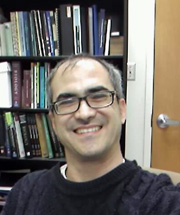
L. Rene Garcia, PhD, is an Associate Professor in the Department of Molecular & Cellular Medicine at Texas A&M University's School of Medicine. His research focuses on the molecular mechanisms governing aging, feeding, and sex-specific mating behaviors in the nematode Caenorhabditis elegans. He uses genetic, pharmacological, and imaging techniques to study how sensory and motor systems adapt to physiological conditions like food deprivation. His work targets molecules such as dopamine receptors, acetylcholine receptors, and potassium channels to understand neuronal and muscular dysfunction in aged organisms.
Education:
- Bachelor of Science in Biology, University of Texas at Austin, 1990
- Doctor of Philosophy in Biology, University of Texas at Austin, 1996
- Postdoctoral Research, California Institute of Technology with Paul W. Sternberg
Research Interests: Garcia's lab investigates how food signals modulate neural and muscular activity through ion channels and signaling pathways. Key areas include:
- Age-related changes in sensory-motor integration
- Neurobiological basis of motivated behaviors (feeding, copulation)
- Pharmacological targets for treating neuronal dysfunction
Publications: Recent work emphasizes molecular signaling pathways (e.g., G-protein-coupled receptors, calcium channels) and their roles in seizure susceptibility and behavioral plasticity. Studies often integrate transgenic models with electrophysiological and imaging techniques.
Awards: No specific awards listed in the provided text.
Grants & Advising: No grant details or student advisees explicitly mentioned. Research focuses on C. elegans behavioral genetics with a strong emphasis on disease-relevant mechanisms.
Labs/Teams: Leads a research group within the Molecular & Cellular Medicine department, collaborating on projects involving C. elegans as a model organism.