

معرفی
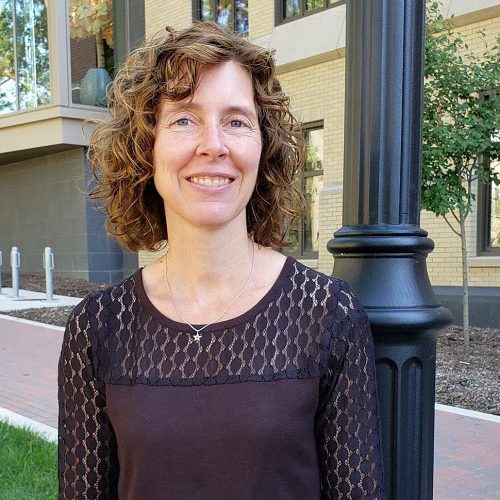
Krys Strand is a faculty member at Concordia College in the Department of Biology within the College of Liberal Arts. They serve as director of the Neuroscience Program and director of National Fellowships and Undergraduate Research, Scholarship, and Creative Activity (URSCA), and are actively involved in teaching and mentoring. Strand teaches courses in neuroscience, neurobiology, and cellular biology, emphasizing outcome-based and active learning strategies.
Their educational background includes a B.A. from Concordia College (1996), an M.B.S. in Biotechnology from the University of Colorado at Colorado Springs, and a Ph.D. in Neurobiology from the University of North Carolina at Chapel Hill.
Strand’s research spans interdisciplinary domains including neuroscience, neuroimmunology, zebrafish models of multiple sclerosis, music’s effects on brain function, and human factors in space flight. Their zebrafish lab investigates how music influences behavior and molecular activity, particularly in demyelination and remyelination. They also collaborate with the Integrated Lunar Martian Analog Habitat at the University of North Dakota on nervous system responses in space environments. In education, Strand focuses on integrating quantitative and computational skills into life sciences curricula and enhancing pedagogical strategies.
Their most recent publications and presentations reflect a dual focus on neurobiological mechanisms in disease models and innovations in undergraduate science education. Work spans molecular neuroscience in autoimmune models, behavioral assays in zebrafish, and scholarship of teaching and learning, particularly around curriculum design and student engagement.
Strand is actively involved in mentoring undergraduate researchers and advising student organizations such as the Concordia Neuroscience Society and Nu Rho Psi. They also support diversity and innovation through roles in the PRIDEnetwork and the Innovation Scholars Program.
Notable collaborations include projects on heart monitoring devices and interdisciplinary student teams. While no formal awards are listed, their sustained scholarly output and leadership in multiple programs highlight significant academic contributions.
حوزههای پژوهشی



.jpg?sfvrsn=292162bb_2)