معرفی
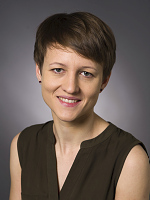
Kristina G. Dunkel serves as an Associate Professor in the Department of Geosciences at the University of Oslo, specializing in crustal processes within the Section for Crustal Processes. Her research focuses on microstructural evolution and deformation mechanisms in Earth's lower crust, with particular emphasis on earthquake processes and fluid-rock interactions in deep crustal environments.
Education:
- BSc in Geosciences, University of Münster, Germany (2008-2011)
- MSc in Geosciences, University of Münster, Germany (2011-2013)
- PhD in Geosciences, University of Oslo (2013-2017)
Her research program integrates detailed microstructural analysis with experimental petrology to investigate earthquake mechanics in the lower crust. Key interests include pseudotachylyte formation as seismic records, dehydration embrittlement processes, and fluid-driven metamorphism in granulite and ultramafic systems. Her fieldwork primarily focuses on Norwegian ophiolite complexes including Lofoten and Leka, where she examines pristine microstructures preserved in deep crustal rocks. Teaching responsibilities encompass Mineralogy (GEO2110), Petrology and Geochemistry (GEO2150), and Petrography and Microstructures (GEO4810), emphasizing hands-on laboratory techniques for microstructural analysis.
Analysis of her publication record reveals consistent thematic focus on the intersection of seismology and petrology, with increasing attention to fluid-mediated processes in the lower crust since 2017. Her work demonstrates methodological diversity, combining field observations, microstructural characterization, and experimental approaches to address fundamental questions about crustal strength and earthquake nucleation.
Dr. Dunkel actively participates in multiple collaborative research initiatives including Break-Through Rocks (ERC), CO2Basalt, CONTINENT (investigating earthquake conditions in the lower crust), NATSORB, and REACTivity under confinement projects. She maintains strong affiliations with the CO2 Storage research group and the NJORD Centre for Studies of the Physics of the Earth, where her expertise in crustal deformation contributes to understanding subsurface processes relevant to carbon sequestration and geothermal energy.