معرفی
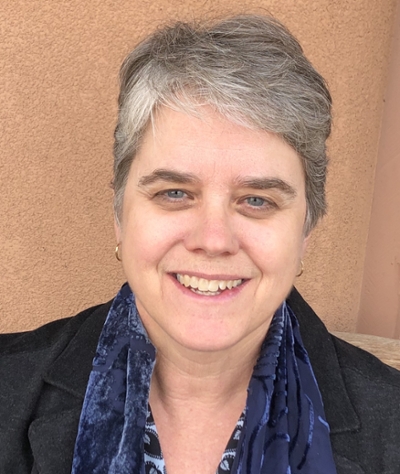
Kimberly Gauderman is a Professor in the History Department at the University of New Mexico, where she has served since 1998. She previously directed the UNM Latin American Studies Program (2005-2008) and acted as Departmental Undergraduate Advisor for nine years (2009-2018). She maintains active affiliations with the UNM School of Law and FLACSO-Quito.
Her educational background includes:
- B.A. in History and French, University of Oregon (1986)
- M.A. in Latin American History, UCLA (1990)
- Ph.D. in Latin American History, UCLA (1998)
Dr. Gauderman's research centers on Early and Modern Latin America with emphases on Ethnohistory, Human Rights, Gender, and Indigenous Peoples. Her work critically examines institutional authority, racial categorization, and gender/sexual identity formation across the Andes, Mexico, and Central America. She integrates historical analysis with contemporary social justice issues including human rights violations, gang violence, and political corruption.
Her publication trajectory reveals a significant pivot toward applied historical practice, particularly in asylum law. Recent works focus on expert witness testimony for Latin American asylum seekers, addressing gender-based violence, LGBTQ+ persecution, and mother/child cases. This bridges colonial ethnohistory with modern legal frameworks.
Major recognitions include:
- Distinguished Feminist Research Lecturer (2020)
- Scholars & Society Fellowship (ACLS/Mellon, 2019-2020)
- Richard E. Greenleaf Conference Award (2017)
- Fulbright Dissertation Research Grant (1994)
As an advisor, she has mentored generations of history undergraduates and collaborates extensively with law students through expert witness training. Her grant portfolio includes the Shoemaker Research Grant (2015-2016) supporting national networks for scholars and lawyers in asylum cases. She co-organized UNM's 2017 national conference 'Practicing Asylum' to standardize academic expertise in immigration courts.
Dr. Gauderman leads collaborative initiatives with FLACSO-Quito and U.S. law school clinics, developing methodologies for historical testimony in asylum proceedings. Her current work establishes interdisciplinary teams connecting historians, legal practitioners, and human rights organizations across the Americas.