معرفی
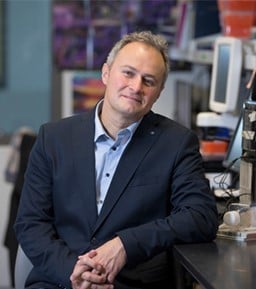
Kevin Schwartzman, MD MPH is a Senior Scientist at the Research Institute of the McGill University Health Centre (RI-MUHC) and a Professor in the Department of Medicine, Faculty of Medicine and Health Sciences at McGill University. He is affiliated with the Translational Research in Respiratory Diseases Program and the Centre for Outcomes Research and Evaluation at RI-MUHC, as well as the Department of Medicine, Division of Respiratory Medicine at the McGill University Health Centre (MUHC).
Dr. Schwartzman's research primarily focuses on tuberculosis care and prevention, with particular expertise in epidemiology, public health, respiratory disease, health economics, and digital adherence technologies. His work centers on designing more effective and cost-effective interventions for tuberculosis, using predictions based on current knowledge of benefits, costs, and impacts including those on patients' quality of life. A significant portion of his current research focuses on potential tuberculosis prevention strategies for migrants to Canada using computer simulation techniques, while also considering the ethical dimensions of these strategies. His research initiative "Tuberculosis in Canada: Modeling to Inform Elimination" demonstrates his commitment to addressing tuberculosis elimination in the Canadian context.
Dr. Schwartzman's scholarly output reveals a strong emphasis on cost-effectiveness analyses, mathematical modeling of disease transmission and intervention impact, and evaluation of digital health technologies for tuberculosis management. His recent publications (2023-2025) show increasing focus on digital adherence technologies, implementation science frameworks like RE-AIM, and the specific challenges of tuberculosis control in migrant populations and other high-risk groups within low-incidence settings. His work bridges clinical medicine, public health, and health economics to address practical challenges in tuberculosis elimination.
Dr. Schwartzman has made significant contributions to advancing knowledge in tuberculosis prevention and care, particularly through his work on the cost-effectiveness of various intervention strategies, his exploration of innovative approaches to tuberculosis control in migrant populations, and his leadership in evaluating digital adherence technologies for tuberculosis treatment. His research has direct implications for public health policy and resource allocation decisions in tuberculosis control programs.