معرفی
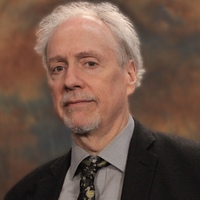
Kevin Schilbrack is Professor of Religious Studies in the Department of Philosophy and Religion at Appalachian State University's College of Arts and Sciences, where he bridges philosophical inquiry with religious studies through multi-disciplinary frameworks addressing global religious diversity.
His educational foundation stems from the University of Chicago Divinity School, shaping his approach to cross-cultural understanding and methodological rigor in religious studies.
Schilbrack's research centers on embodied cognition and social ontology as revolutionary lenses for understanding religion, rejecting supernatural frameworks in favor of practice-based analysis. He champions a tripartite academic model integrating interpretive humanities, explanatory social sciences, and normative evaluation to prevent civilizational clashes in our interconnected world. His work emphasizes how religious meaning emerges from social practices rather than abstract beliefs, with particular focus on realism's revival in religious studies methodology.
Analysis of his 15 most recent publications reveals a decisive shift toward discursive realism and social ontology, moving beyond postmodern skepticism to establish religion as a socially emergent phenomenon. Key trends include dismantling supernatural assumptions in philosophy of religion, developing practice-based theories of religious formation, and establishing normative evaluation frameworks for cross-cultural religious comparison—all while engaging cutting-edge cognitive science.
His scientific recognition includes:
- Visiting Fellow at Harvard University
- Scholar-in-Residence at University of Uppsala
- Scholar-in-Residence at Vrije Universiteit Amsterdam
Schilbrack actively shapes the field through editorial leadership on the Journal of the American Academy of Religion and Sophia, grant evaluation for the National Endowment for the Humanities, and service as external dissertation committee reader. His frequent invitations to speak at Oxford, Yale, Cambridge, and other global institutions reflect his influence in redefining religious studies methodology through embodied cognition frameworks.
His collaborative work manifests through international scholarly networks and editorial boards rather than formal laboratories, with significant impact visible in the 15+ publications engaging his scholarship by peers like Mikel Moberg and Mikel Burley.