معرفی
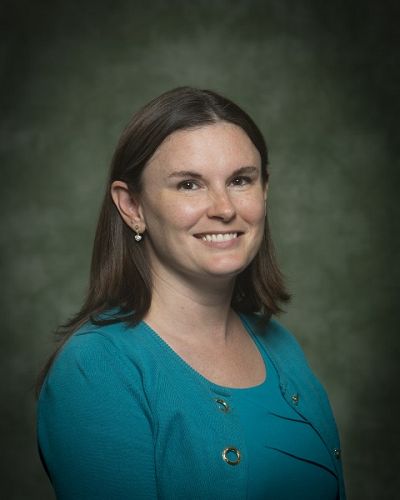
Keja Valens is Professor of English at Salem State University, where she has taught since 2005. She currently serves as Coordinator of Graduate Programs in English and English Education and holds the position of Lead Faculty for the department. Her academic home is within the English Department, focusing on advanced literary studies and pedagogy.
Dr. Valens earned her Ph.D. in Comparative Literature from Harvard University in 2004. Her scholarly trajectory demonstrates deep engagement with transnational literary traditions and critical theory.
Her research explores Caribbean literature, queer theory, and food studies through interdisciplinary lenses. Key contributions include analyzing Caribbean cookbooks as decolonial texts, examining transnational feminisms, and investigating culinary practices as identity markers. Her work consistently bridges literary analysis with postcolonial theory, gender studies, and diaspora scholarship, revealing how cultural production intersects with power structures.
Recent publications show increasing focus on Caribbean ecopoetics and open educational resources, with her 2024 monograph Culinary Colonialism establishing cookbooks as sites of national resistance. Collaborative projects like the 2022 OER initiative demonstrate commitment to accessible scholarship while maintaining rigorous theoretical frameworks.
Scientific Awards:
- No major scientific awards listed in provided materials
As Graduate Program Coordinator, Dr. Valens mentors capstone students (ENG 994/998) and directs studies (ENG 875). Her collaborative grant work includes the 2022 Association of College and Research Libraries project on OER for social justice, reflecting commitment to educational equity. Current research involves Dominican cookbooks under Trujillo and Haitian independence recipes.
She actively participates in the Digital Caribbean Studies initiative and presents regularly at the West Indian Literature Conference and Caribbean Studies Association. Her international collaborations span scholars across the Americas, focusing on transnational literary networks and decolonial methodologies.