/prod01/production-cdn-pxl/media/umassdartmouth/profiles/arts-and-sciences/biology/Katrina-Velle.jpg)
معرفی
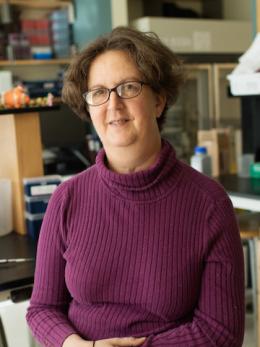
Katrina Velle is an Assistant Professor of Biology in the Department of Biology at the University of Massachusetts Dartmouth, where she returned as faculty in 2024 after being an undergraduate student. She teaches advanced cell biology courses and runs the Velle Lab, which opened in January 2024 and focuses on Naegleria research.
Her educational background includes:
- PhD from University of Connecticut (2018)
- BS in Biology from University of Massachusetts Dartmouth (2012)
Dr. Velle's research focuses on the cell biology of Naegleria amoebae, particularly Naegleria fowleri (the "brain-eating amoeba") and its non-pathogenic relative Naegleria gruberi. Her work centers on understanding how the actin cytoskeleton drives cell processes like migration in these organisms, which uniquely lack microtubules during their amoeboid stage. This research has significant implications for understanding eukaryotic evolution and developing treatments for Naegleria infections, which have a 95% fatality rate.
Her recent publications demonstrate a consistent focus on cytoskeletal mechanisms in Naegleria, revealing how these organisms move, divide, and feed without the typical microtubule network found in most eukaryotes. This work bridges cell biology, microbiology, and evolutionary biology.
Her notable scientific awards include:
- K99/R00 grant from the National Institutes of Health (NIH) worth $746,999 over three years for "Defining Cytoskeletal Mechanisms Driving Cell Motility in Naegleria"
- $105,270 from Amazing Aven's Quest for Amoeba Awareness for related research on Naegleria fowleri
Dr. Velle actively mentors undergraduate students in research, already having one undergraduate working in her lab with a postdoctoral fellow joining in April. She emphasizes undergraduate research opportunities and is committed to supporting students who may be exploring their academic paths, drawing from her own experience of switching majors twice as an undergraduate. Her grants provide substantial funding for student research positions.
The Velle Lab, established in January 2024, provides a dedicated research space for studying Naegleria amoebae. The lab's work aims to uncover fundamental biological mechanisms that could lead to new treatments for Naegleria infections, which currently have no reliable treatments and a 95% fatality rate.