معرفی
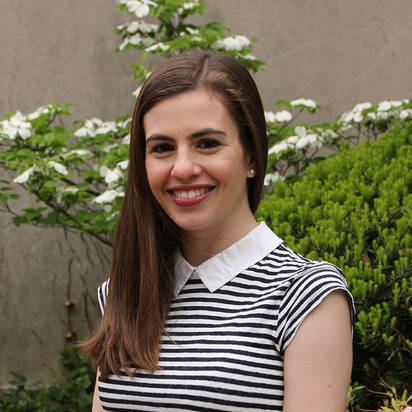
Katharine G. Trostel serves as Associate Professor and Unit Chair of Humanities at Ursuline College, a women-focused liberal arts institution in Ohio. She also holds dual program director roles for both English and Humanities programs at the college. Since joining Ursuline in 2018, Trostel has dedicated her work to building the college's capacity in public humanities with a specific focus on the Rust Belt region of the United States.
Dr. Trostel's research interests center on Rust Belt studies, public humanities, memory studies, and urban humanities, with additional scholarly work in Jewish studies and Latin American literature. Her approach emphasizes place-based and community-engaged scholarship, particularly focused on Cleveland and the broader Rust Belt region. She has developed a distinctive methodology for 'emplaced humanities' that connects academic research with community needs and regional identity, examining how post-industrial communities remember, document, and reimagine their spaces through transformative texts.
Trostel's publication record reveals a strong trajectory toward regional humanities ecosystems, with increasing focus on the Rust Belt since 2018. Her work bridges memory studies with contemporary regional challenges, examining how communities remember, document, and reimagine post-industrial spaces. She has made significant contributions to understanding the Venice Ghetto as a transnational memory site while simultaneously developing frameworks for Rust Belt regional identity through publications like 'Rust Belt Futures: Building the Rust Belt Humanities Lab' and 'Reading, Writing, and Teaching the Rust Belt.'
Dr. Trostel has secured significant external funding for her work, including a grant from the Teagle Foundation's 'Cornerstone: Learning for Living' initiative for the project 'Rhetorics of the Rust Belt: Framing Cleveland through Transformative Texts.' She is actively working on a Modern Language Association's Pathways Step Grant for 'Towards a Rust Belt Humanities Ecosystem' in collaboration with Cuyahoga Community College and Teaching Cleveland. Additionally, she organized a National Endowment for the Humanities Summer Institute for Higher Education Faculty in 2023 entitled 'Reading, Writing, and Teaching the Rust Belt: Co-Creating Regional Humanities Ecosystems.'
As editor-in-chief of the academic journal Rust Belt Studies and co-director of the Rust Belt Humanities Lab at Ursuline College, Trostel has established institutional frameworks for sustained regional humanities work. The Rust Belt Humanities Lab serves as a hub for collaborative research, community partnerships, and academic programming focused on the cultural, historical, and social dimensions of the Rust Belt region. Her work has helped position Ursuline College as a leader in regional humanities initiatives within Northeast Ohio, creating pathways for students and faculty to engage deeply with their regional context through humanities scholarship.