
معرفی
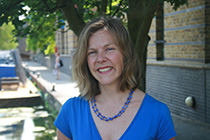
Professor Kate Spencer is a leading environmental geochemist at Queen Mary University of London, serving as Professor of Environmental Geochemistry and Deputy Dean for Research Impact in the School of Geography. Her research bridges geomorphology, hydrology, and ecology to address critical issues in estuarine and coastal sediment management. She is actively involved in teaching across undergraduate and postgraduate programs, emphasizing experiential and consultancy-style learning.
Her research focuses on sediment-bound contaminants, cohesive sediment dynamics, flocculation, saltmarsh restoration, and the environmental impacts of historical coastal landfills and dredging. She employs advanced techniques such as X-ray computed tomography and 3D imaging to study floc structure and microplastic transport. Her work is supported by major funders including NERC, Defra, and the Environment Agency, and she collaborates with institutions like the Environment Canada and the Natural History Museum.
Kate Spencer’s recent publications highlight a trend toward interdisciplinary environmental science, combining traditional geochemistry with cutting-edge imaging and modeling. Key themes include climate change impacts on coastal landfills, microplastic sedimentation, and 3D quantification of floc porosity. Her work has significant policy relevance, particularly in pollution risk assessment and coastal management.
- President elect of the Estuarine and Coastal Science Association (2012–present)
- Invited keynote speaker at international conferences in Venice and Germany
- International visiting fellowships at National Water Research Institute (Canada) and University of Xiamen (China)
She has successfully supervised over ten PhD students and is actively recruiting new researchers through programs like the EU Erasmus Mundus SMART and the London NERC DTP. Her supervision focuses on hydrology, sediment structure, biogeochemistry in saltmarshes, and environmental impacts of flooding and landfills. She has led major projects on mine water pollution, coastal waste, and hydrodynamic dredging. Her research group utilizes advanced laboratories and field methods, including in-situ XRF and 3D imaging, to support both fundamental science and applied environmental solutions.
حوزههای پژوهشی


