معرفی
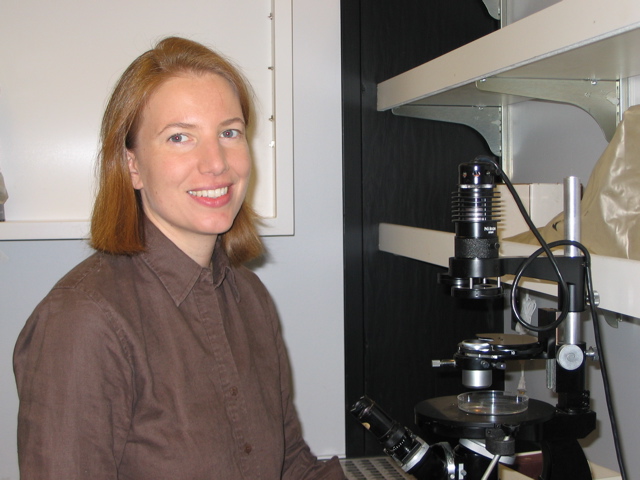
Professor Kate Quinlan is a distinguished academic at the University of New South Wales (UNSW), where she serves as a Professor in the School of Biotechnology and Biomolecular Sciences (BABS). Her research program focuses on gene regulation mechanisms, with particular emphasis on understanding the communication between immune cells and fat cells within adipose tissue to identify new therapeutic targets for obesity. With a career spanning over two decades, Professor Quinlan has established herself as a leading researcher in transcription factor biology, skeletal muscle metabolism, and the genetic regulation of metabolic processes.
Professor Quinlan's educational background includes:
- BSc (Hons) (Advanced) from the University of Sydney (2000)
- PhD in Transcription Factor Biology from the University of Sydney (2002-2006) under the supervision of Professor Merlin Crossley
- Postdoctoral training at Children's Hospital at Westmead (2006) under Professor Kathryn North
- Postdoctoral training at University of Cambridge (2008-2010) with NHMRC CJ Martin Fellowship
Professor Quinlan's research program spans several interconnected areas of molecular and cellular biology. Her primary focus is on understanding gene regulation mechanisms, particularly the communication between immune cells and fat cells within adipose tissue. This work aims to uncover new therapeutic targets for obesity and related metabolic disorders. A significant portion of her research has investigated the human ACTN3 gene polymorphism and its effects on skeletal muscle performance, metabolism, and response to various physiological challenges. Her laboratory also studies transcriptional regulation of hematopoiesis and transcription factor mechanisms, with particular interest in zinc finger proteins and their role in gene expression. Professor Quinlan employs a range of advanced techniques including epigenome editing, protein-DNA binding analysis, and stem cell differentiation models to address fundamental questions in gene regulation.
Analysis of Professor Quinlan's recent publications reveals a strong focus on molecular mechanisms of gene regulation, particularly in the context of metabolic disorders and blood-related conditions. Her work frequently intersects hematology, immunology, and metabolism, with recurring themes of transcription factor function, epigenetic regulation, and cellular communication. A notable trend is her investigation of fetal globin gene regulation as a potential therapeutic approach for hemoglobin disorders, alongside her longstanding interest in skeletal muscle biology and metabolism. Her research demonstrates a consistent pattern of bridging basic molecular mechanisms with potential clinical applications.
Professor Quinlan's scientific achievements have been recognized through several prestigious awards:
- UNSW Scientia Fellowship (2018)
- NHMRC CJ Martin Fellowship (for postdoctoral training at University of Cambridge)
As an academic mentor, Professor Quinlan supervises multiple PhD and Honours students, guiding the next generation of researchers in molecular and cellular biology. Her research program is supported by competitive funding from national research bodies, enabling her laboratory to pursue innovative approaches to understanding gene regulation and its implications for human health. Professor Quinlan actively collaborates with researchers both within UNSW and internationally, including longstanding collaborations with Professor Merlin Crossley and Professor Kathryn North. Her laboratory maintains strong connections with clinical researchers, facilitating the translation of basic science discoveries into potential therapeutic applications.
Professor Quinlan leads an active research group within the School of Biotechnology and Biomolecular Sciences at UNSW. Her laboratory brings together expertise in molecular biology, biochemistry, and cellular physiology to investigate complex questions in gene regulation. The research team employs a multidisciplinary approach, combining traditional biochemical techniques with cutting-edge genomic and proteomic methodologies. Professor Quinlan's laboratory maintains strong collaborative ties with other research groups both within UNSW and internationally, fostering an environment of scientific exchange and innovation.