معرفی
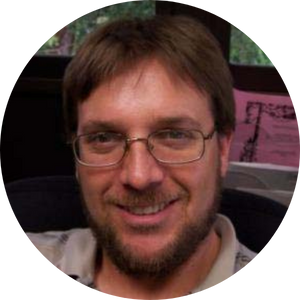
Kai Coshow Rains serves as a Research Associate Professor in the School of Geosciences at the University of South Florida, where his work bridges hydrological sciences, ecological dynamics, and environmental policy through interdisciplinary research on wetland ecosystems and hydrological connectivity.
Education:
- Ph.D. in Ecology (Soil Nutrients & Mycorrhizal Ecology) from University of California at Davis
- MS in Botany from University of Washington at Seattle
- BS in Biochemistry/Biophysics from Oregon State University at Corvallis
Research Focus: Dr. Rains investigates ecosystem responses to environmental stressors—including inundation, disturbance, and nutrient limitations—at both organismal (root growth, mycorrhizal associations) and landscape scales (geospatial assessment of waters and wetlands). His expertise spans wetland functional assessment, mycorrhizal ecology, biogeochemical cycling, and hydrological connectivity from ridges to reefs, with emphasis on policy-relevant applications for water resource management.
Publication Trends: Recent works (2022-2024) reveal three dominant trajectories: (1) advanced remote sensing applications using UAVs, lidar, and machine learning for wetland monitoring; (2) biogeochemical processes in mangrove/nutrient-limited systems; and (3) decision-support tools like septic-to-sewer conversion frameworks. This evolution demonstrates increasing integration of geospatial analytics with field hydrology to address climate resilience challenges.
Research Leadership: As co-leader of the Ecohydrology Research Group (founded 2003), Dr. Rains directs investigations across wetlands, headwater streams, and estuaries, emphasizing cross-disciplinary collaboration between hydrological, ecological, and sociopolitical domains to inform water law and policy.
Mentorship and Funding: Dr. Rains mentors graduate and undergraduate students within the Ecohydrology Research Group framework. His externally funded projects include Florida Department of Environmental Protection agreements (AT015, AT020) for septic-to-sewer conversion prioritization tools and groundwater recharge mapping initiatives.