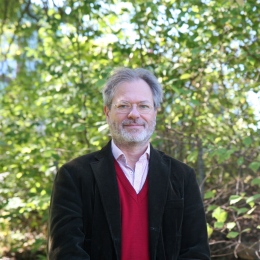
معرفی
Justin P Boren is an Associate Professor in the Communication Department at Santa Clara University specializing in organizational communication, with research centered on workplace stress dynamics and social support networks. He developed the seminal concept of Communicatively Restricted Organizational Stress (CROS) and serves as vice chair of the County of Santa Clara's Human Rights Commission.
Education:
- B.A. in Speech Communication, California State University at Long Beach (2002)
- M.A. in Communication, California State University at Long Beach (2005)
- Ph.D. in Communication, The Hugh Downs School of Human Communication, Arizona State University (2010)
Research Focus: Boren's work pioneers the study of CROS—defined as employees' perceived inability to communicate about stressors—and its physiological health consequences. His research program integrates organizational communication with psychophysiology, examining how social support networks buffer stress in workplaces ranging from healthcare to academia. He investigates work-life balance mechanisms, conflict management strategies, and the biological correlates of communication behaviors through rigorous quantitative methodologies.
Publication Trends: His 15 most recent publications (2014-2023) reveal three dominant trajectories: (1) Theoretical and measurement development of CROS across professions, (2) Physiological investigations linking social support to immune function and metabolic health, and (3) Contextual applications in nursing, academia, and marital relationships. This body of work demonstrates consistent interdisciplinary integration of communication theory with health psychology and biological markers.
Professional Engagement:
- American Psychological Association
- Society for Industrial and Organizational Psychology
- Western States Communication Association
- National Communication Association
Academic Leadership: Boren teaches core courses including Quantitative Research Methods, Organizational Communication, Conflict Management, and The Biology of Human Communication. His pedagogy bridges theoretical communication frameworks with biological and psychological applications, notably through courses examining the physiological dimensions of human interaction.