معرفی
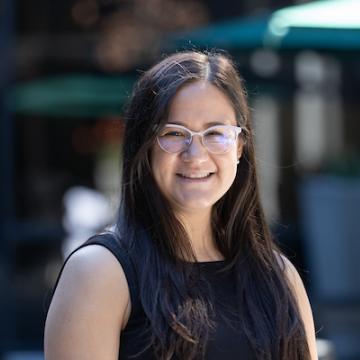
Professor Juno Kim is a distinguished academic at the University of New South Wales, affiliated with the School of Optometry and Vision Science within the Faculty of Medicine and Health. She maintains an active research laboratory known as the Sensory Processes Research Laboratory and teaches several courses including VISN1101 Vision Science Perspectives, OPTM3201 Ocular Imaging and Applied Vision Science, VISN5512 Sensory Processes and Movement, and OPTM7218 Research Project.
Professor Kim earned her PhD in Psychology from the University of Sydney in 2005, following a BSc (Honours-I) in 1998 and BSc studies in Computer Science, Psychology and Mathematical Statistics in 1997, all from the University of Sydney.
Her research focuses on understanding how humans perceive real-world and virtual environments, with particular expertise in virtual reality and cybersickness, multi-sensory integration, and visual perception of materials (gloss, color, shape, transparency). She investigates how the brain infers information about physical properties through neural signals from our six senses, with strengths in visual and vestibular neurophysiology. Her work has significant applications in head-mounted display virtual reality (HMD VR) for interactive entertainment and health-related gamification.
Professor Kim has received notable recognition including the 2022 Educational Excellence Award from the Faculty of Medicine and Health.
She has secured multiple ARC grants, including the 2023 ARC Discovery Project 'Enhancing sensory perception and balance control in HMD-based VR', the 2021 ARC Discovery Project 'Unleashing the potential of VR: reducing sickness in head-mounted displays', the 2014 ARC Future Fellowship 'Image constraints on the perception of surfaces and materials', and the 2010 ARC Discovery Project 'The perception of surfaces and materials'. She actively collaborates with industry partners including Bandicoot Imaging Sciences, Video Games Deluxe, Canon Inc, and NATO (HFM-MSG-346).
Professor Kim supervises research in vestibular neurophysiology, human movement, material and surface perception, virtual reality, and perception of self-motion. Current supervision topics include perception of surface shape and translucency, virtual environments, self-motion perception (vection), corneal nerve morphology in ophthalmology, and Galvanic Vestibular Stimulation for HMD VR.