معرفی
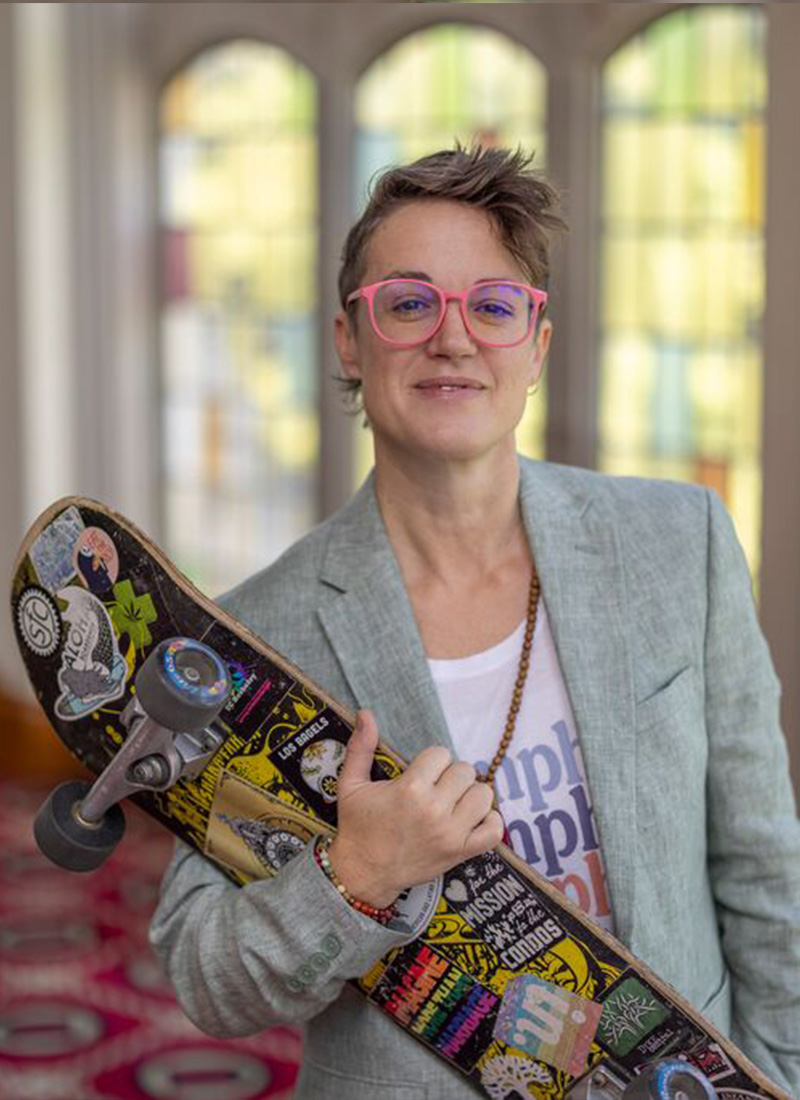
Dr. Joy Brooke Fairfield is an Associate Professor and Chair of Media Studies at Rhodes College in Memphis, Tennessee. She also holds affiliations with Gender and Sexuality Studies and Latin American and Latinx Studies programs. A media-maker and scholar, her work bridges live performance, film/video, and community organizing with academic research. Her primary focus is on queer intimacy, consent practices, and repair mechanisms in contexts of indigenous dispossession and racial capitalism.
Education includes a PhD in Performance Studies from Stanford University (2016), an MA from NYU (Performance Studies), and a BA from Harvard University. She won the Charles R. Lyons Memorial Prize for her doctoral dissertation and edited a special issue on Intimacy Choreography for the Journal for Dramatic Theory and Criticism (2019). As an assistant faculty member with Theatrical Intimacy Education (TIE), she trains professionals in consent-based intimacy practices.
Recent creative projects include directing Earth as Lover: An Ecosex Walking Tour in Germany and Ecosex in the City in NYC, both with performance artists Annie Sprinkle and Beth Stephens. In Memphis, she co-directed the opera As One (2019) and provides intimacy choreography for theatre/film projects. Collaborations include Knight & Brinegar (musical theatre) and Dragonfly/Robin Laverne Wilson (ABSCONDED).
Her publications critically examine performance ethics, decolonial methodologies, and queer world-building. Key themes include consent-based staging, fugitivity in performance, and intersectional activism. She actively engages in Memphis-based queer resistance efforts, as seen in her 2024 analysis of Tennessee's drag ban.
Awards include the Charles R. Lyons Memorial Prize and recognition through her editorial leadership. Her work often intersects with community-based projects, emphasizing praxis between academic research and grassroots activism. Current research trends explore queer futurisms, decolonial performance frameworks, and the ethics of collaborative creation in marginalized communities.