معرفی
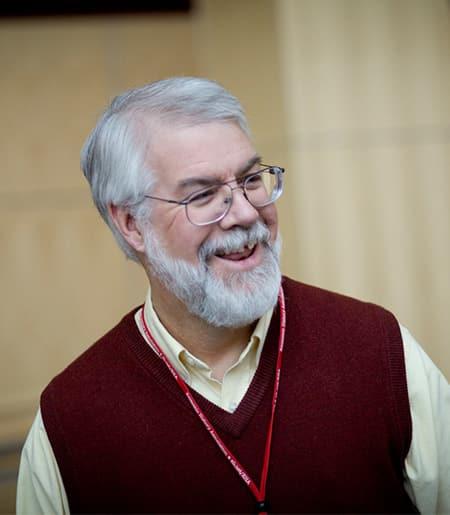
Dr Joseph Harley is a Senior Lecturer in the Faculty of Arts, Humanities, Education and Social Sciences at Anglia Ruskin University (ARU), where he serves as Course Leader for the MA History program. A historian specializing in early modern British and European history, he focuses on poverty, welfare, consumption, and material culture from the 16th to 19th centuries.
- PhD History, University of Leicester, 2016
- MA History, University of Warwick, 2011
- BA (hons.), University of Leicester, 2010
- Fellow of the Royal Historical Society, 2022
- Fellow of the Higher Education Academy, 2020
His research examines the material lives of the poor through consumption patterns, domestic spaces, and social relations. He has published extensively on topics such as workhouse conditions, dog ownership among the impoverished, and the use of pauper inventories to understand welfare systems under the Old Poor Law (1601-1834). His 2024 monograph At Home with the Poor analyzes consumer behavior in impoverished households, while his upcoming 2025 co-edited book Objects of Poverty explores 18th-century material culture.
Joseph’s publications span journal articles, book chapters, and edited collections, with recurring themes of historical poverty, domestic production, and the emotional significance of household goods. His work challenges assumptions about the material deprivation of the poor, demonstrating their agency in improving domestic environments through consumer choices.
- Fellow of the Royal Historical Society, 2022
- Fellow of the Higher Education Academy, 2020
- Economic History Society fellowship, Institute of Historical Research, 2016-2017
He supervises PhD students in British history (1500-1950) and teaches modules including The Making of Modern Britain and From Workhouses to Universal Credit. Joseph has contributed to BBC’s Who Do You Think You Are? as an advisor and serves as Editorial Assistant to Urban History. His research methodology combines archival analysis of pauper inventories with interdisciplinary approaches to material culture and welfare systems.