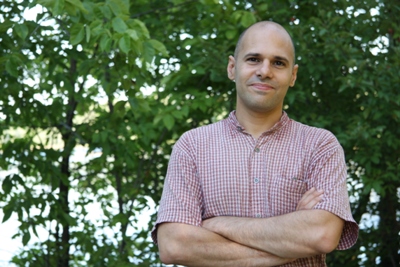
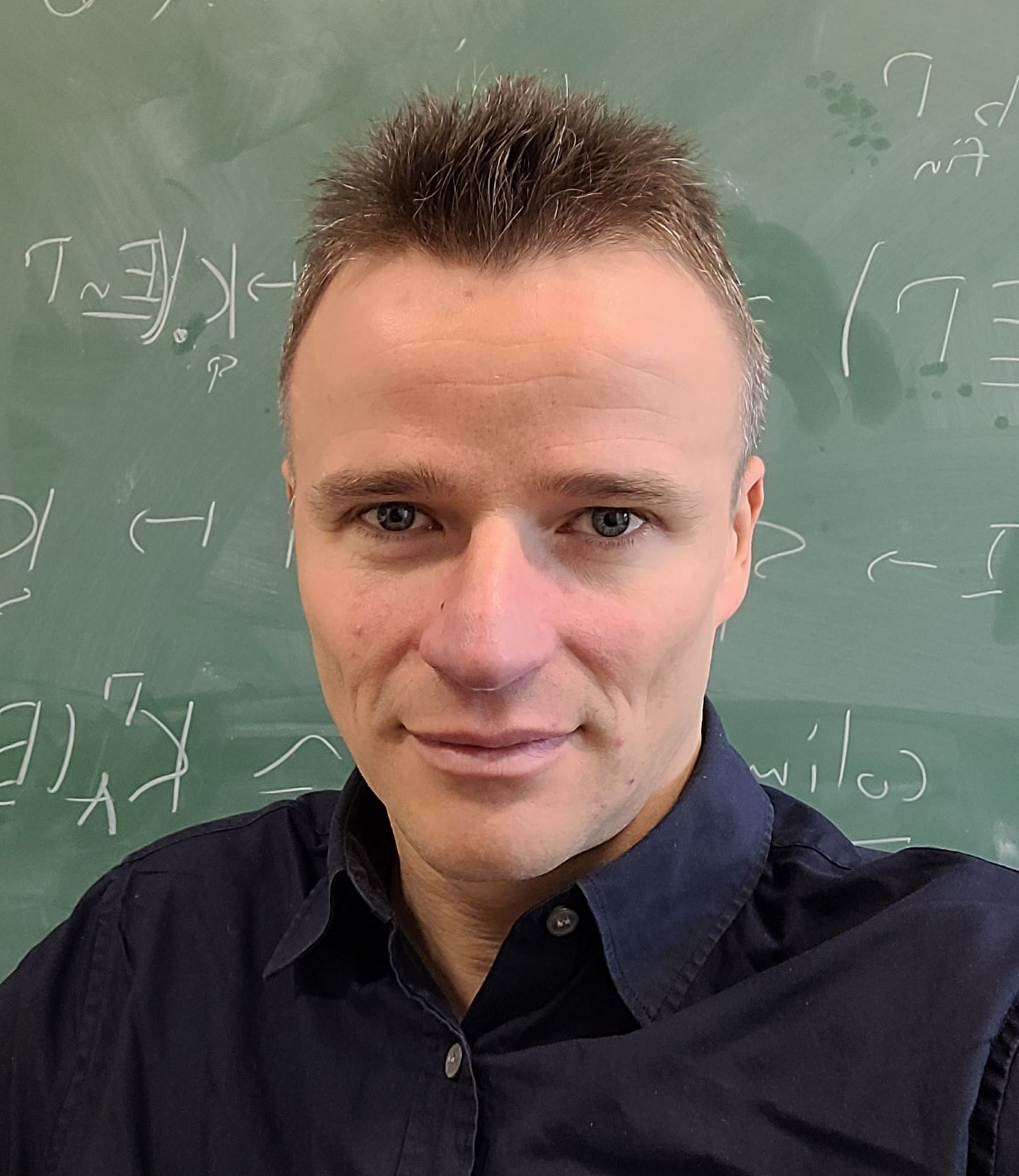
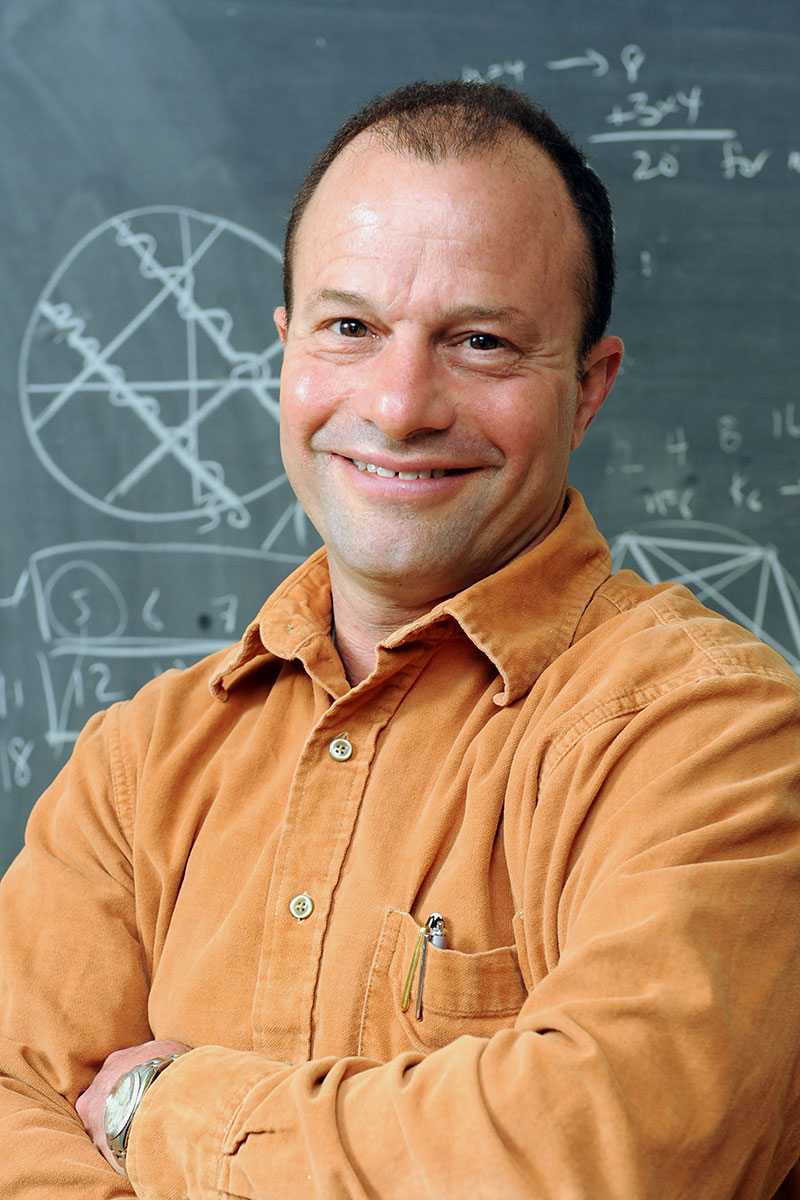
Joseph A. Ball
استاد · Multidimensional System Theory
Virginia Polytechnic Institute and State Universityمعرفی
Joseph A. Ball is a Professor of Mathematics at the Virginia Tech, located in Blacksburg, Virginia. He holds a Ph.D. from the University of Virginia. His research focuses on Multidimensional System Theory, Multivariable Operator Theory, and Complex Analysis, with particular emphasis on scattering systems, conservative linear systems, and operator-theoretic methods in control theory.
Ball has contributed extensively to the theoretical foundations of systems governed by multidimensional dynamics, including work on noncommutative systems, invariant subspaces, and robust control. His recent publications explore topics such as Schur-class multipliers, transfer-function realizations, and scattering theory in both classical and noncommutative settings. He serves on the editorial boards of the Journal of Mathematical Analysis and Applications and Integral Equations & Operator Theory, reflecting his leadership in operator theory and related fields.
His research trends emphasize the interplay between abstract operator theory and applied systems engineering, particularly in addressing challenges posed by multidimensional and infinite-dimensional systems. Ball’s work often bridges algebraic structures (e.g., Cuntz algebras, matrix polynomials) with analytic techniques (e.g., interpolation, reproducing kernel Hilbert spaces), yielding insights into both fundamental mathematics and practical control methodologies.
Ball has advised numerous students and researchers through his teaching and mentorship, though specific advisee names are not listed. His grants and collaborations are integral to advancing the frontiers of operator theory and its applications, though details on specific grants are not provided in the source material.
His contributions extend to foundational texts and monographs, such as the Memorial Volume for Constantinescu, where his work on de Branges-Rovnyak spaces and transfer operators has been featured. Ball’s research continues to shape modern approaches to system theory and operator algebras.