معرفی
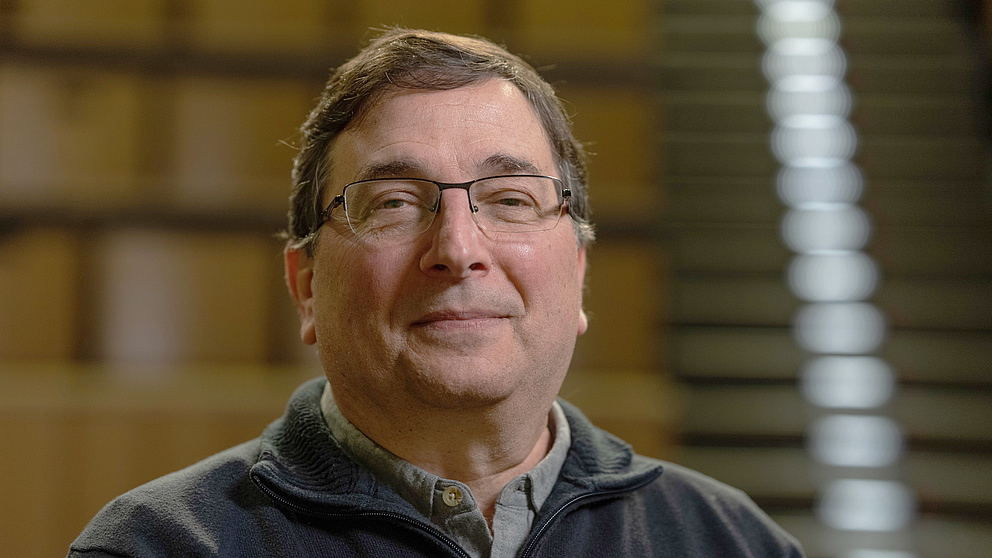
Jose Hernandez-Orallo is Professor at the Polytechnic University of Valencia's Valencian Research Institute for Artificial Intelligence (VRAIN) and Senior Research Fellow at the Leverhulme Centre for the Future of Intelligence, University of Cambridge. He also serves as Research Affiliate at the Centre for the Study of Existential Risk. His academic journey includes a B.Sc. and M.Sc. in Computer Science from UPV, partly completed at École Nationale Supérieure de l'Électronique et de ses Applications in France, and a Ph.D. in Logic and Philosophy of Science from the University of Valencia.
Hernandez-Orallo's research centers on AI evaluation and measurement, with particular focus on developing frameworks for assessing capabilities, generality, progress, impact, and risks of artificial intelligence systems. His work spans machine learning performance evaluation, data science, intelligence measurement, and the philosophical implications of AI. He is renowned for his book The Measure of All Minds (Cambridge University Press, 2017), which received the PROSE Award 2018 from the Association of American Publishers.
His recent projects include 'Data Science Benchmark for LLM Agents' funded by Open Philanthropy, 'MT4XAI: Machine Teaching for Explainable AI' funded by the Norwegian Research Council, and collaborations with the OECD on 'AI and the Future of Skills' and with the European Commission on characterizing Foundation/Frontier Models. His publications reveal a strong trend toward developing psychometric approaches for AI evaluation, creating predictive frameworks for model performance, and addressing safety challenges in increasingly capable AI systems.
- EurAI Fellow
- Member of AAAI, CLAIRE and ELLIS
- Editorial board member of Springer journals Machine Learning and Data Mining and Knowledge Discovery
- Area Chair for IJCAI, AAAI, ECAI, KDD, ECML, and NeurIPS
Hernandez-Orallo actively contributes to shaping AI policy through his work with international organizations and has been involved in developing the EU AI Code of Practice. His research group DMIP (Data Mining, Machine Intelligence and Inductive Programming) focuses on creating more insightful analyses of AI capabilities and developing frameworks for trustworthy AI evaluation. He teaches data science and data mining at the master's level and has reached over 15,000 students through his MOOC on Machine Learning and Data Science.