معرفی
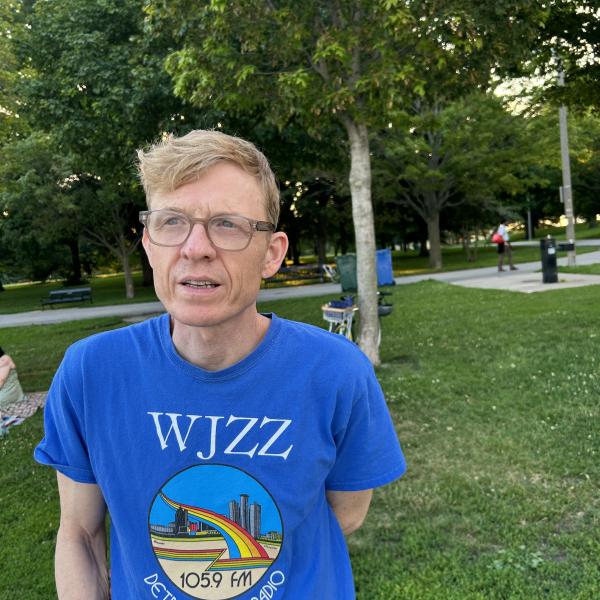
Jonathan Flatley is a Professor in the Department of English at the University of Chicago, where he has taught since 2024. His interdisciplinary work bridges American, African American, French, and Russian literary traditions with art history, cultural studies, and political theory. He earned his Ph.D. in Literature from Duke University in 1996 and has established himself as a leading scholar in affect theory and aesthetic philosophy.
Flatley's research centers on collective emotion as the foundation for political action, examining how aesthetic practices create modes of belonging and collective agency. His influential books include Affective Mapping: Melancholia and the Politics of Modernism (Harvard, 2008), which reinterprets modernist attachments to loss as mechanisms for worldly engagement, and Like Andy Warhol (Chicago, 2017), which positions Warhol's work as a utopian project of emotional attachment through liking. His current book project Black Leninism: How Revolutionary Counter-Moods Are Made investigates the formation of Black revolutionary collectives through emotional transformation, while his Clark/Oakley Fellowship-supported research explores human-tree kinship amid ecological crisis.
His recent publications reveal consistent engagement with revolutionary moods, political affect, and aesthetic resistance across historical contexts—from Cold War visual culture to contemporary police abolition movements. The work demonstrates methodological innovation in connecting artistic practices to collective emotional infrastructure, with recurring themes of melancholic attachment, queer relationality, and radical hope emerging as throughlines in his scholarship.
Flatley teaches diverse courses spanning modernism, cultural studies, African American literature, and environmental humanities. For 2025-2026, he offers Media Aesthetics, Queer Theory and Queer Practices, Aesthetics of Agitation and Propaganda, and Thinking with Trees—a course examining human arboreal entanglement through literature, philosophy, and ecological fieldwork. His pedagogy reflects his research commitment to understanding how aesthetic forms generate political possibilities through emotional transformation.