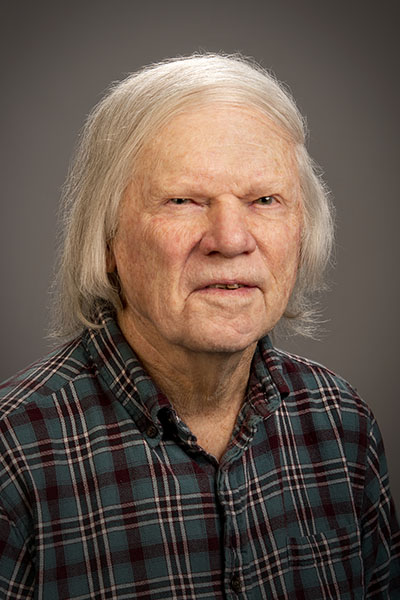
Jon Pierre Fortney
عضو هیئت علمی · Pedagogy and Expository Writing
University of Maryland, Baltimore Countyمعرفی
Jon Pierre Fortney is an Assistant Teaching Professor in the Department of Mathematics and Statistics at the University of Maryland Baltimore County (UMBC), part of the College of Natural and Mathematical Sciences. He joined UMBC in Fall 2024 and has over twenty years of teaching experience, including roles at Zayed University in Dubai, the University of the Virgin Islands, and the University of Arizona. His academic background includes a Ph.D. in Mathematics from Arizona State University (2008), and dual degrees in Mathematics and Actuarial Science and Chemical Engineering from the University of Pennsylvania (1996).
Fortney’s scholarly interests focus on pedagogy, expository writing, and innovative teaching methods. He has authored three undergraduate-level textbooks: Calculus for Business and Economics (2025), Discrete Math for Computer Science (2020), and A Visual Introduction to Differential Forms and Calculus on Manifolds (2018). His research emphasizes the pedagogy of geometry, particularly the historical transition from Euclidean to non-Euclidean geometries and their applications in art and design.
Fortney has published extensively in mathematics education and applied mathematics, including works on Hamiltonian systems and electrical networks. His teaching spans courses from precalculus to advanced topics like differential forms and discrete mathematics. He is dedicated to bridging theoretical concepts with practical applications, as evidenced by his textbook appendices on circuit design.
- Education:
- Ph.D. in Mathematics, Arizona State University, 2008
- B.A. in Mathematics and Actuarial Science, University of Pennsylvania, 1996
- B.S.E. in Chemical Engineering, University of Pennsylvania, 1996
- Key Contributions:
- Textbook Authorship: Three impactful textbooks in mathematics education.
- Pedagogical Innovation: Focus on accessible teaching methods for geometry and calculus.
- Research: Contributions to differential forms, Hamiltonian dynamics, and catalytic materials.