معرفی
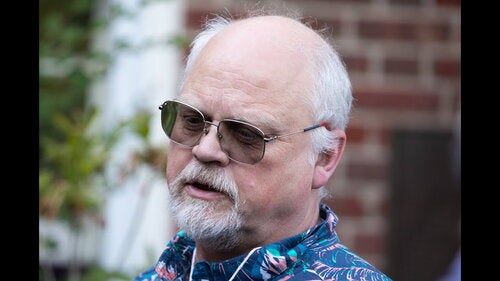
Jon P. Bannon is a Professor of Mathematics at Siena University (formerly Siena College), where he has been a faculty member since 2005. He earned his B.S. and Ph.D. in Mathematics from the University of New Hampshire, completing his doctoral thesis under the supervision of Liming Ge. Dr. Bannon has progressed through the academic ranks at Siena from Assistant Professor (2005-2011) to Associate Professor (2011-2017) and finally to Professor (2017-present).
Dr. Bannon's research focuses on advanced areas of mathematics, particularly von Neumann algebras and operator algebras. His work explores noncommutative joinings, factors, bimodules, and connections to quantum entanglement and dynamical systems. He has made significant contributions to understanding the structure of von Neumann algebras, including work on Folner invariants, Haagerup's approximation property, and noncommutative measure theory.
His publication record shows a progression from foundational work on Folner invariants (2007) and Haagerup's property (2008) to increasingly sophisticated research on noncommutative joinings (2017-2021) and quasinormalizers in crossed products (2024). The most recent publications demonstrate expanding theoretical depth while maintaining connections to quantum information theory through works on operator algebras and quantum entanglement.
- Full Factors and Co-Amenable Inclusions (2019)
- Noncommutative Joinings series (2017-2021)
- Correlation Numerical Range and Trace-Positive Complex Polynomials (2016)
- Work on Haagerup's Approximation Property (2008)
- Folner Invariant for Type II_1 Factors (2007)
Dr. Bannon is actively engaged in undergraduate research, having supervised numerous projects that resulted in publications with student co-authors. He and his students have presented their work internationally at venues including the British Mathematical Colloquium in Lancaster, the University of Copenhagen, and the Chinese Academy of Sciences in Beijing. His educational research includes a 2016 publication on the Tech Valley Scholars Program in the Journal of STEM Education.
His teaching philosophy emphasizes conceptual understanding over rote learning, believing that "if it isn't in your head, you can't use it to think." He particularly enjoys teaching Modern Algebra and Real Analysis, courses where "students get a taste of what it means to be a mathematician," and he aims to employ active learning methods that encourage constructive thought while combating the "contemporary belief that we do not need to internalize ideas or information because of calculators or Google."