معرفی
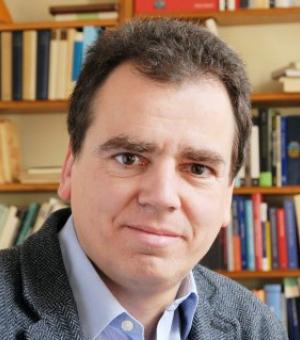
Johannes Zachhuber serves as Professor of Historical and Systematic Theology at the University of Oxford's Faculty of Theology and Religion. Previously, he held academic positions at Humboldt University in Berlin, establishing a distinguished career bridging ancient and modern theological traditions.
His research spans two primary domains: late ancient Christian theology with its philosophical foundations and nineteenth-century Christian thought. Zachhuber demonstrates exceptional expertise in Patristics, particularly the works of Gregory of Nyssa and the Cappadocian Fathers, while simultaneously exploring the development of German theology from Kant to contemporary times. His work reveals how early Christian thinkers engaged with philosophical traditions and how these engagements evolved through the modern period.
Zachhuber's publications reveal a consistent focus on the philosophical dimensions of theological concepts across historical periods. His recent work on Gregory of Nyssa's Hexaemeron, Platonism in late ancient cosmology, and nineteenth-century German theology demonstrates his ability to analyze complex theological-philosophical intersections. The trajectory of his scholarship shows increasing attention to how theological concepts develop in dialogue with broader intellectual currents.
As editor of significant reference works including the Oxford Handbook of Nineteenth Century Christian Thought and the Oxford History of Modern German Theology, Zachhuber has shaped scholarly conversations in his field. His editorial work complements his monographs by providing comprehensive frameworks for understanding theological development.
Zachhuber's academic contributions extend to interdisciplinary collaborations, particularly in examining concepts like sacrifice and individuality across theological, philosophical, and anthropological perspectives. His work on the reception of ancient philosophical concepts in Christian thought has established him as a leading scholar bridging historical and systematic theological approaches.