معرفی
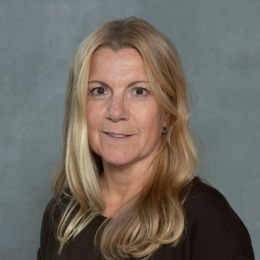
Jenny Lennartsson serves as Associate Professor in Biosciences at the University of Skövde, where she holds dual responsibilities in research and academic leadership. She is Program Manager for both the bachelor's program 'Biosciences - Biological Resources and Sustainable Development' and the master's program 'Sustainable Management and Use of Biological Resources', while maintaining active research in theoretical biology and network analysis.
Her academic background includes a Master's degree in Theoretical Ecology from the University of Skövde (2004) with thesis 'A stochastic metapopulation model of the spread of foot-and-mouth disease in the old Skaraborg County', followed by a Doctorate in Theoretical Biology from Linköping University (2012) with thesis 'Networks and epidemics – impact of network structure on disease transmission'.
Lennartsson's research focuses on the intersection of network theory and biological systems, particularly examining how network structures influence disease transmission dynamics and biodiversity conservation. Her work bridges theoretical modeling with practical applications in sustainable resource management and environmental policy implementation. Recent projects include 'Landscape biodiversity capacity: a tool for measuring, monitoring and managing' (2019-2021) and 'Systems Biology Networks, Disease Transmission, and Animal Health' (2015).
Her recent publication record shows a transition toward educational research alongside her core biological work, with the 2024 report 'Examination of large student groups – opportunities and challenges' indicating growing interest in pedagogical innovation. The majority of her research output centers on network algorithms and their biological applications, with significant contributions to spatial network modeling through publications like 'SpecNet' in PLOS ONE (2012).
As an educator, Lennartsson teaches courses in biology, sustainable development, and environmental legislation across multiple undergraduate programs. She coordinates several course offerings including 'Sustainable Development' (7.5 credits), 'Environmental Legislation' (3 credits), and 'Biodiversity and Ecosystem Services' (7.5 credits), demonstrating comprehensive coverage of sustainability topics within the biosciences curriculum.
Her laboratory and research team activities center around systems biology approaches to ecological and epidemiological questions, utilizing computational modeling to address real-world challenges in disease control and biodiversity conservation. Current work focuses on developing practical tools for landscape-level biodiversity assessment and creating simulation models for predicting disease spread in animal populations.