معرفی
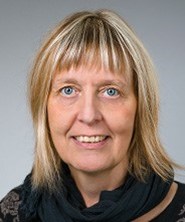
Jenny Eklöf serves as Associate Professor in the Department of Historical, Philosophical and Religious Studies at Umeå University, specializing in History of Science and Ideas. Based at Humanisthuset (Room HUM.K.129) in Umeå, she functions as student counsellor while maintaining active research and teaching responsibilities within Sweden's academic landscape.
Her educational credentials include achieving Docent qualification—a Swedish academic title signifying independent research capability—and recognition as Distinguished University Teacher for pedagogical excellence. These qualifications underpin her dual commitment to scholarly rigor and innovative teaching practices.
Eklöf's research critically examines the contested terrain where scientific knowledge interfaces with political agendas and media representations. She investigates how fields like genetics, biofuels, and mindfulness become embedded in public discourse through historical analysis of media coverage, policy debates, and scientific controversies. Her work reveals how scientific authority is constructed, challenged, and reshaped in societal contexts—particularly through studies of early genetic engineering debates in Swedish media and the scientization of mindfulness practices.
Analysis of her publication trajectory shows sustained focus on science-media-politics entanglements with evolving methodological sophistication. Recent work increasingly incorporates digital humanities approaches while maintaining historical grounding, demonstrating consistent attention to how scientific narratives are framed across different media landscapes and historical periods.
Her scientific recognition includes:
- Distinguished University Teacher award
Eklöf actively mentors students through her student counsellor role and contributes to interdisciplinary knowledge production as Health Humanities research group member. While specific grant details aren't publicized, her extensive publication record across three decades indicates successful research continuity. Her teaching innovations in digital humanities pedagogy demonstrate commitment to evolving academic practices.
As core member of Umeå University's Health Humanities research group, she bridges historical analysis with contemporary health discourse, examining how historical perspectives illuminate current debates about neuroscience, mindfulness, and medicalization within societal contexts.