معرفی
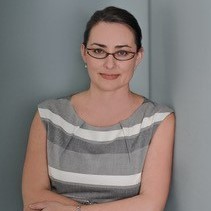
Jennifer Steeves is a Full Professor in the Department of Psychology, Faculty of Health at York University, where she also serves as Associate Vice President Research. She holds the York Research Chair in Non-invasive Visual Brain Stimulation and leads the Perceptual Neuroscience Laboratory. She is an active supervisor in the Biology Graduate Program and affiliated with multiple research institutes, including the Centre for Vision Research, Vision: Science to Applications (VISTA), and the SickKids Research Institute. She also holds adjunct professorships at the University of Toronto and the University of Waterloo.
Her research focuses on how the brain adapts to sensory loss, particularly in individuals who have lost one eye early in life. She investigates neural plasticity using fMRI, TMS, psychophysics, and eye-tracking. Her work reveals structural and functional reorganization in the visual and auditory cortices, enhanced auditory localization, and reduced susceptibility to audiovisual illusions like the McGurk effect in monocular individuals.
Her recent publications highlight the use of rTMS for treating visual hallucinations, cortical reorganization after sensory deprivation, and multisensory integration. These studies span clinical applications and fundamental neuroscience, showing trends in brain stimulation, neurochemical changes (GABA/glutamate), and cross-modal plasticity.
- York Research Chair in Non-invasive Visual Brain Stimulation
Dr. Steeves has supervised numerous PhD, Master’s, and undergraduate students, many of whom have continued in neuroscience research. Her lab receives funding for studies on visual snow, Charles Bonnet Syndrome, and brain stimulation. She collaborates across disciplines and institutions, contributing to national networks like CAPnet. She actively mentors the next generation of scientists and leads major research initiatives at York University.
The Perceptual Neuroscience Laboratory, located in the Sherman Health Science Research Centre at York University, brings together psychologists, neuroscientists, and clinicians. The lab utilizes fMRI, TMS, MR spectroscopy, and psychophysics to study both healthy and clinical populations, including those with retinoblastoma, prosopagnosia, and post-stroke visual impairments.
حوزههای پژوهشی