معرفی
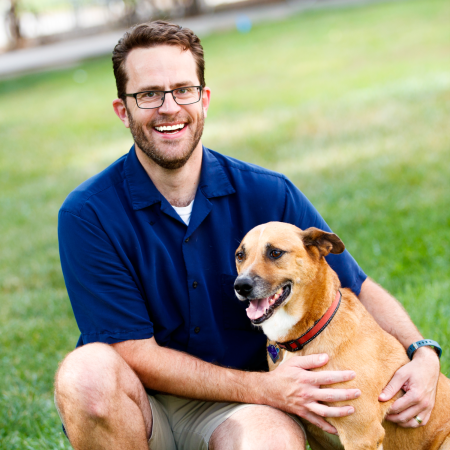
Jeffrey Stevens is a Susan J. Rosowski Professor in the Department of Psychology and the Center for Brain, Biology & Behavior at the University of Nebraska-Lincoln. He directs the Canine Cognition and Human Interaction Lab and serves as a Data Science Mentor at Posit Academy. His academic journey includes a Ph.D. in Ecology from the University of Minnesota, a postdoctoral fellowship in Psychology at Harvard University, and research scientist position at the Max Planck Institute for Human Development in Berlin.
Dr. Stevens' research program integrates perspectives from biology, psychology, computer science, neuroscience, and economics to understand decision making in humans and other animals. His work spans canine cognition, human-animal interactions, intertemporal choice, and quantitative methods in behavioral research. He has worked with over 15 different species of fish, birds, and mammals, with particular focus on dogs and corvids. His research employs data science approaches and emphasizes open science practices to ensure transparency and reproducibility.
The analysis of his recent publications reveals a strong trend toward big team science approaches in comparative cognition, particularly through the ManyDogs Project which involves multi-lab collaborations to investigate canine behavior and cognition. His work increasingly combines traditional behavioral methods with computational approaches, including machine learning algorithms for similarity judgments and decision making. There is also a clear trajectory toward understanding the intersection of biological mechanisms and behavioral outcomes, particularly in the domains of impulsivity, quantity discrimination, and social cognition.
- Susan J. Rosowski Professor (named professorship)
- Co-director of the ManyDogs Project
- Active participant in Big Team Science initiatives
Dr. Stevens actively mentors undergraduate and graduate students, having trained hundreds of students in data science methods. He is currently seeking motivated undergraduate students to join his Canine Cognition and Human Interaction Lab. His research has been supported by multiple grants including from the National Science Foundation, University of Nebraska Food for Health Collaboration Initiative, Nebraska EPSCoR, and the Alexander von Humboldt Foundation. He teaches courses in Evolution, Behavior, and Society; Controversial Issues in Psychology; Animal Learning and Cognition; and Psychology of Decision Making.
Dr. Stevens leads the Canine Cognition and Human Interaction Lab, which conducts research on dog behavior, cognition, and the human-dog bond. The lab is part of the ManyDogs Project, a large-scale collaborative effort investigating canine cognition across multiple laboratories worldwide. His work emphasizes methodological rigor, open science practices, and interdisciplinary approaches to understanding decision making across species.