معرفی
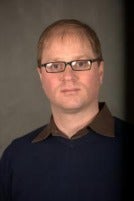
Jeffrey S. Urbach is a Professor in the Department of Physics at Georgetown University, where he also holds the Interdisciplinary Chair in Science and serves as Vice Provost for Research. He has previously served as Chair of the Physics Department (2000–2001, 2004–2007, 2016–2020) and as Director of the Institute for Soft Matter Synthesis and Metrology (2011–2015). His academic leadership extends to co-founding and co-directing the Program on Science in the Public Interest until 2011.
His education includes a B.A. in Physics from Amherst College (1985), a Ph.D. from Stanford University (1993), and a postdoctoral fellowship at the University of Texas at Austin (1993–1996). He joined Georgetown as an Assistant Professor in 1996 and was promoted to Professor in 2006.
Prof. Urbach's research centers on complex dynamics and biophysics, with a focus on systems that exhibit emergent behavior, such as shear-thickening fluids, vibrating granular materials, cytoskeletal networks, and migrating neurons. His group employs tools from statistical physics and nonlinear dynamics, combined with advanced imaging, image analysis, and computational modeling, to derive quantitative descriptions of seemingly disordered systems.
He has received significant recognition including the Sloan Research Fellowship, the Presidential Early Career Award for Scientists and Engineers (PECASE), and is a Fellow of the American Physical Society. His research has been supported by major funding agencies such as the National Science Foundation (NSF), National Institutes of Health (NIH), NASA, Air Force Office of Scientific Research (AFOSR), NIST, Petroleum Research Foundation, Research Corporation, and the Whitaker Foundation.
Prof. Urbach has advised numerous students and mentored researchers through his lab and the Institute for Soft Matter, though specific names are not listed in the provided text. He has also contributed to science policy, having served as an AAAS Science and Technology Policy Fellow at the U.S. Department of Energy during 2009–2010.
He leads or has led key research initiatives including the Institute for Soft Matter Synthesis and Metrology and is affiliated with interdisciplinary efforts such as the Science Policy Interest Group and the Program on Science in the Public Interest. His work bridges fundamental physics with biological and engineering applications, aiming to uncover universal principles in complex systems.