معرفی
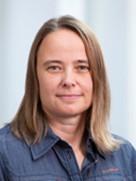
Jean Bollard is a Postdoctoral Researcher at the Centre for Star and Planet Formation within the Globe Institute at the University of Copenhagen's Faculty of Science. His research focuses on the early evolution of the Solar System through high-precision isotope analysis of meteoritic materials, particularly chondrites and their components.
His primary research interests include:
- Early Solar System formation chronology
- Isotope geochemistry of meteorites (Pb, Mg, Si systems)
- Chondrule formation processes and thermal histories
- Planetesimal accretion timescales
- Protoplanetary disk chemical evolution
- Development of high-precision dating techniques
Dr. Bollard's recent work has examined silicon isotope variations in chondritic components, investigated 26Al/27Al heterogeneity across the protoplanetary disk, and developed improved methodologies for Pb-Pb dating of extraterrestrial materials. His research integrates analytical chemistry with planetary science to reconstruct the timeline of events during the first few million years of Solar System history. His publications reveal consistent focus on chondrule chronology as a key to understanding disk dynamics and early planetary accretion.
His work has been widely disseminated in high-impact journals including Earth and Planetary Science Letters, Astrophysical Journal Letters, Science Advances, and Geochimica et Cosmochimica Acta. His 2017 paper in Science Advances on planetary building blocks has received over 167 Scopus citations, demonstrating significant impact in the field. His research has been featured in 13 news outlets and referenced in Wikipedia, indicating broad scientific and public interest.
Dr. Bollard maintains active collaboration with Professor Martin Bizzarro's research group at the Centre for Star and Planet Formation, which specializes in cosmochemistry and early Solar System studies. His work frequently appears in the context of major international collaborations involving institutions across Europe and North America, as evidenced by his extensive co-authorship network spanning multiple countries.